
Family Vacation in Nepal
Family Vacation in Nepal: Adventures That Bond, Inspire & Create Lifelong Memories
Most families planning a vacation in Nepal admit they never considered this country for that purpose. What they thought Nepal would be: a country for the rugged, adventurous, breathtaking, and adrenaline-rushing treks or climbs. Well, they're not totally wrong, but that's not what this country is limited to.
Nepal has a way of doing that. It defies the assumptions people carry into it.
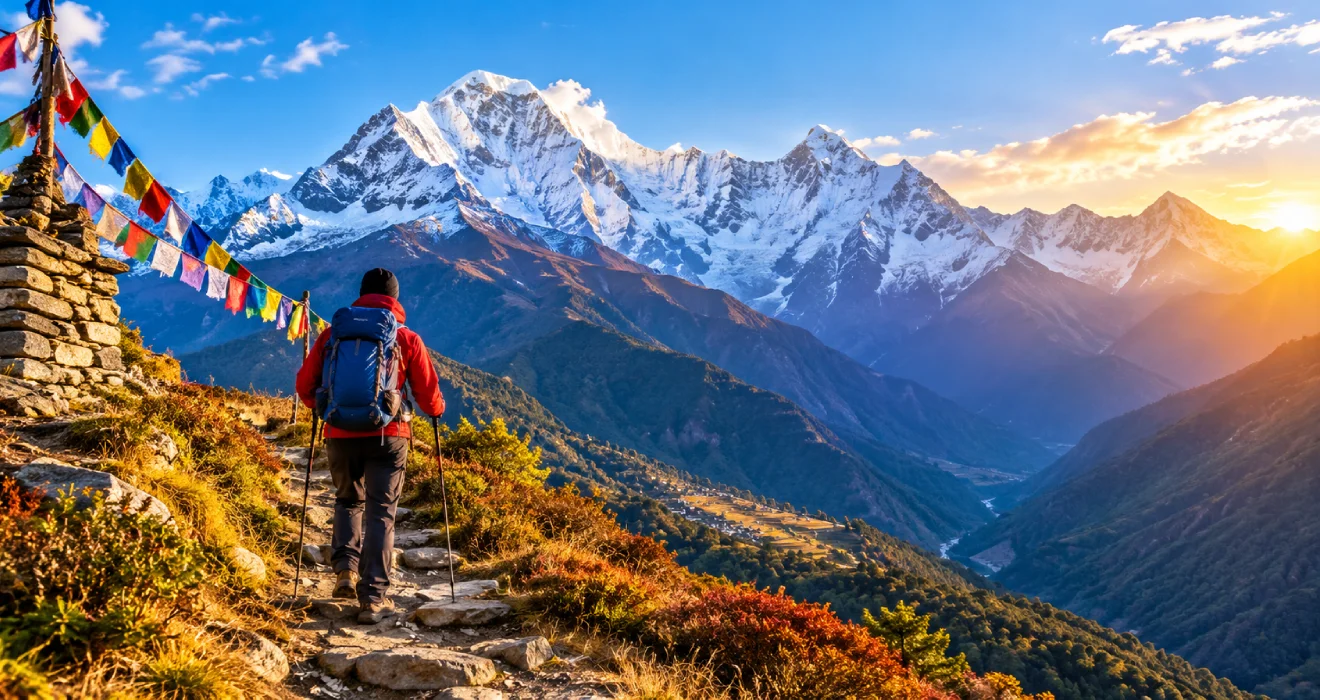
The country is not one thing. Nepal is a lowland jungle where one-horned rhinos wade through tall grass at dawn. It is cobblestoned medieval cities where local festivals still shut down entire neighbourhoods. It is teahouse trails through forests that smell of pine and woodsmoke, with the Himalayas visible through the trees in the gaps between ridges. Families who come here on a ten or twelve-day trip rarely feel they have seen the same Nepal twice.
We've been running family trips out of Kathmandu for years, and the pattern we see most often is this: families arrive with managed expectations and leave trying to figure out how quickly they can come back. The country has that effect. It's not loud about it, there's no obvious headline attraction doing the marketing work, but it gets under people's skin in a way that a beach resort or a city break rarely does.
What follows is a practical account of where to take your family, what's genuinely worth the time, and how to put together an itinerary that holds up across different ages.
First, Let's Understand What Kind of Trip This Is
Most people assume Nepal means trekking. Moreover, they assume trekking means suffering. Neither holds true here.
Yes, Nepal has trails that challenge elite athletes. But it also has two-day village walks near Pokhara that a six-year-old can handle easily. The country covers an enormous range, from jungle lowlands to river plains, old cities, lakeside towns, and high mountain passes. As a result, a family can move through two or three of those zones in ten days and never repeat the same kind of experience.
Furthermore, Nepal charges substantially less than the maximum global options. A well-organised ride with private guides, stable lodging, and all internal shipping runs way cheaper than, say, coastal Australia or Northern Europe. For families travelling with a couple of children, the gaps matter. You can stay an extra night somewhere without rebuilding the finances.
The trips that work first-class don't try to encompass the whole lot. Instead, they anchor around two or three robust studies, a stretch of path, a wildlife park, a town or two, with enough room among them that no one's sprinting for a jeep on consecutive mornings.
Family Trekking in Nepal: The Honest Version
We'll start here because it's what most families worry about. Can kids actually do this? What happens if someone wants to stop?
Children are often better on the trail than their parents expect. The routes we plan for families are well-maintained. Teahouses serve hot food every couple of hours. A good guide reads the group and adjusts the pace so the walk feels like an adventure rather than an endurance test. We've had eight-year-olds finish Poon Hill without a single complaint. We've also seen adults turn back at day two because they overestimated themselves. Age, therefore, isn't really the limiting factor.
Here are a few amazing trekking trails for families:
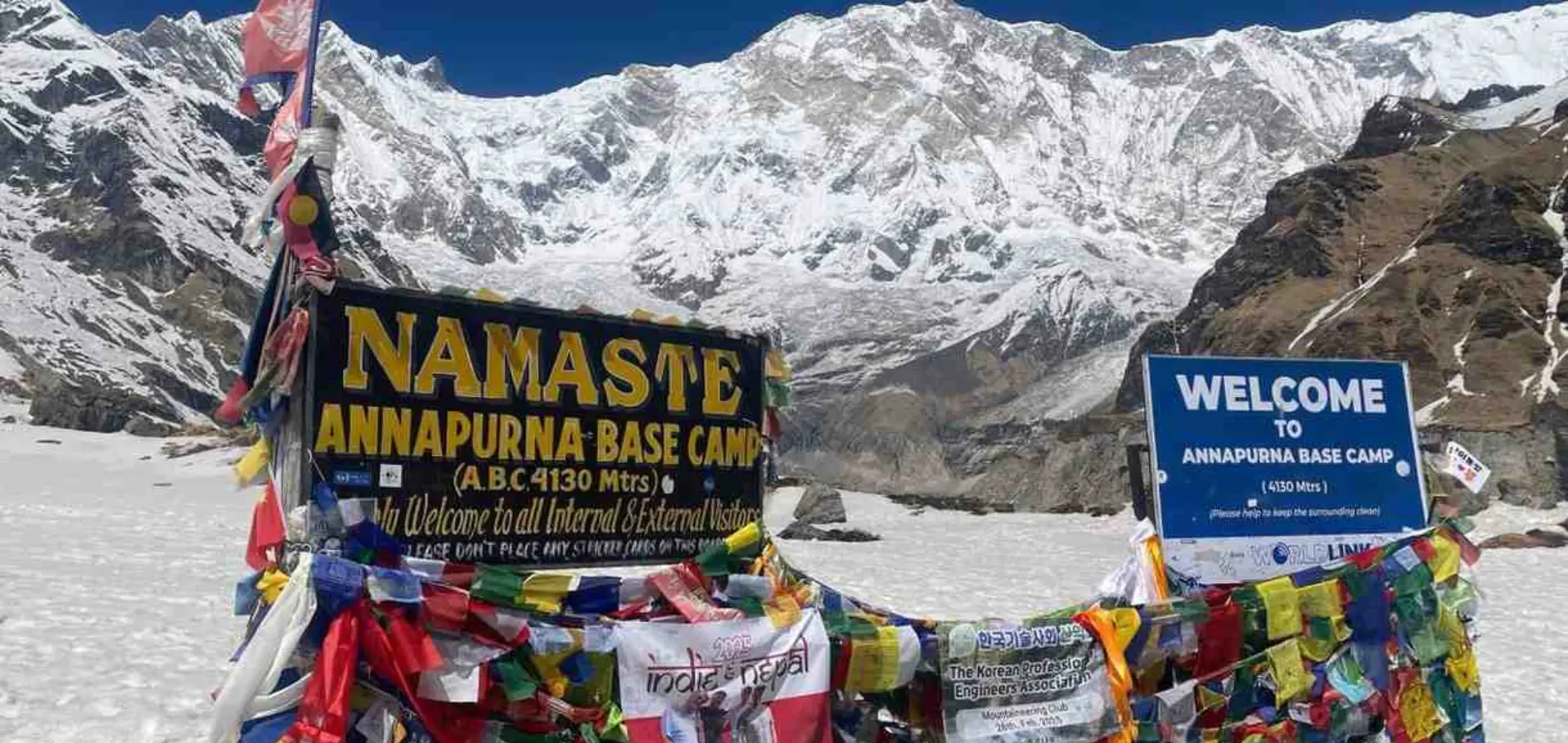
Ghorepani Poonhill Trek: Itinerary is 4-5 days with a maximum altitude of 3210 meters. Perfect to see the rhododendron forest, Annapurna sunrise, and live in the authentic Gurung villages.
Australian Camp: Itinerary is 2-3 days with a maximum altitude of 2060 meters. Very close to Pokhara and a perfect trek for trekkers with no experience and children.
Royal Trek: Itinerary is 3-4 days with a maximum altitude of 1730 meters. A low elevation trekking trail with quiet villages and no altitude concerns.
Dhampus village: Itinerary is 1-2 days with a maximum altitude of 1650 meters. Probably the easiest intro into trekking that still feels genuinely remote.
Langtang Valley Trek: Itinerary is 5-7 days with a maximum altitude of 3800 meters. A trekking trail with extensive Tamang cultural experience, serious mountain scenery, and fewer crowds.
Mardi Himal (lower) Trek: Itinerary is 3-4 days with a trail quieter than Poonhill, offering comparable views.
All these places are perfect for a family vacation in Nepal that goes a little beyond comfort.
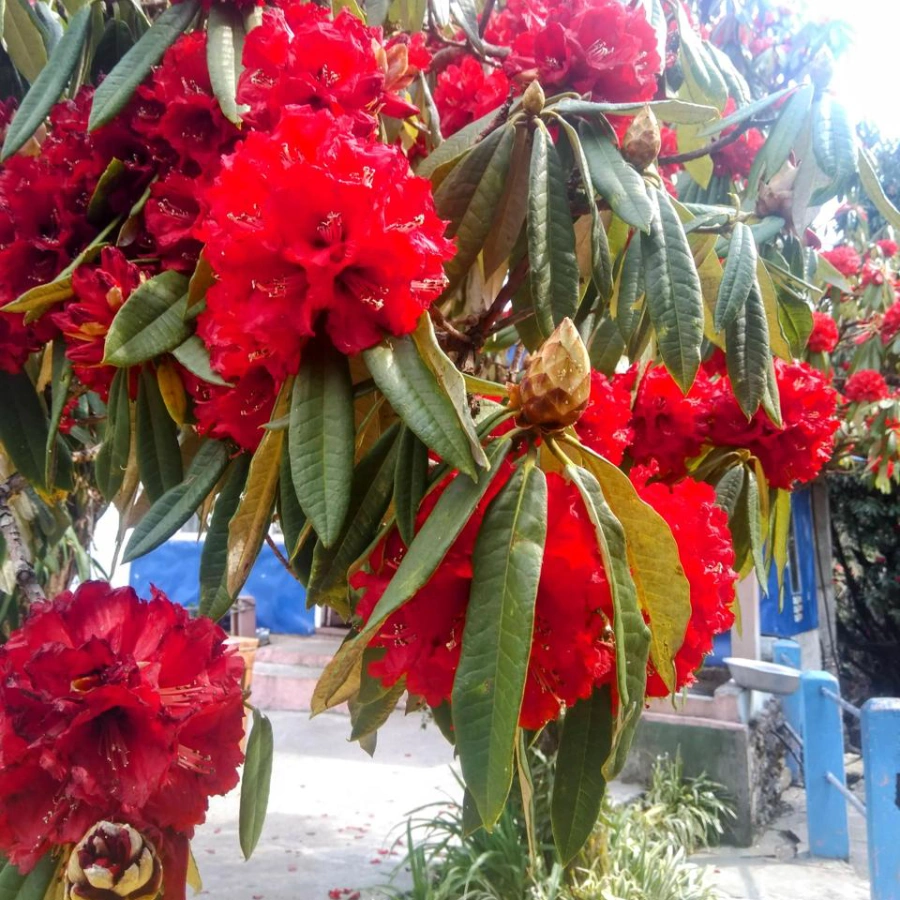
Poon Hill earns its reputation. The trail climbs through oak and rhododendron forest; in late March, the blooms turn entire hillsides red. Along the way, you pass slate-roofed Gurung villages where locals serve tea in small metal cups and ask where you're from.
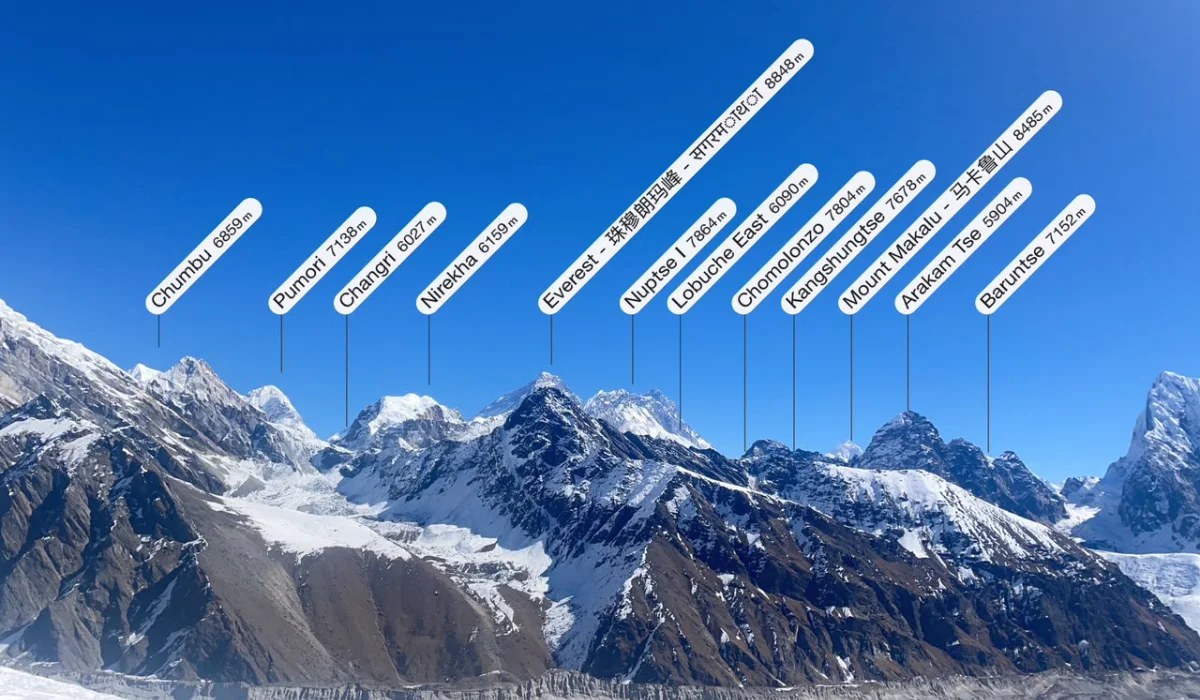
Then on the final morning, you reach a ridge above the clouds. Dhaulagiri sits to one side. Annapurna stretches to the other. Machapuchare stands directly ahead. Children bring up that morning unprompted, years later.
For younger kids or families new to trekking, however, the Australian Camp near Pokhara makes more sense. It's short, the views are real, and you can return to the city if things fall apart. Dhampus cuts it shorter still, one night out, but still gives children the genuine feeling of having left the road behind.
On altitude and children: Keep youngsters below ten below 3,500m where feasible. Altitude illness in children regularly looks like irritability or an awful headache in preference to the textbook signs and symptoms adults understand. So go slowly, don't gain huge elevation on again-to-back days, and permit the manual to make the call, not the itinerary.
Chitwan: Often the Trip's Standout Memory
Ask any family returning from Nepal's trip what they remember the most. It's usually not the famous Himalayan sunrise. Often, it's Chitwan.
Chitwan National Park sits in Nepal's flat southern lowlands, more or less 5 hours by car from Kathmandu. The panorama down there feels completely exclusive from anything further north. Wide river floodplains, dense sal forest, and tall golden grass where large animals disappear completely. It's a UNESCO World Heritage Site, and it holds the one-horned rhinoceros, the Bengal tiger, the Asian elephant, the gharial crocodile, and so many species of birds within one park boundary.
On a morning jeep ride, a skilled naturalist spots things before your eyes. You can see animals like a rhino inside the lengthy grass, a deer frozen at the tree line, and many more for sure. Sightings are common enough that we inform families to assume a rhino. But tigers? They have a mood of their own, so we by no means promise a tiger. Even so, the specific high-quality of interest a tiger search creates in a vehicle full of children is really worth the pressure on its own. Everyone goes quiet. Everyone leans ahead. Phones go face down.
The canoe ride on the Rapti River works differently. There's no engine noise, no speed, just drifting past mugger crocodiles on sandbanks and birds most visitors couldn't name. After the jeep drive's tension, the canoe's slowness feels earned.
Then there's the Tharu village walk, which most families nearly skip and then wish they hadn't. The Tharu are the indigenous people of the Terai. Their settlements sit inside the park boundary, and their relationship with the forest goes back centuries. An evening walk with a Tharu guide, followed by a local dinner and a short cultural performance, gives the whole Chitwan experience a human dimension that the wildlife drives don't cover.
Plan two nights minimum. Three nights is better if the schedule allows.
Kathmandu: Harder to Love First, Worth Sticking With
We may not oversell Kathmandu. The traffic is difficult. Air nice within the town centre during dry months is not super. The streets comply with no apparent good judgment. First impressions are regularly difficult.
Still, push past that first morning. A manual that reads a circle of relatives' tempo changes the city completely. Suddenly, the equal streets display something, a temple tucked inside a residential courtyard, a chai stall that really has occupied the same nook for 40 years, a narrow passage among vintage Newari houses that opens onto a square no one else visits that day. Kathmandu doesn't give itself up quickly. That's part of what makes it interesting.
Swayambhunath, the hilltop stupa everyone calls the Monkey Temple, works well as a starting point, especially with younger children. The monkeys handle most of the engagement for you. The view from the top, meanwhile, shows newcomers how the valley sits and what its scale actually is. Boudhanath, by contrast, is quieter. The wide circular path around the great stupa has monks on their morning rounds and pigeons on every available ledge. It's a good place to slow down on a day when the city's pace has been too much.
Bhaktapur, though, is the one that tends to convert the sceptics. The medieval Newari city sits twenty kilometres east of Kathmandu, and the Durbar Square doesn't require imagination to appreciate; it's all still there. The fifty-five-window palace. The potters shaping clay in open courtyards at Potters' Square. The juju dhau, thick yoghurt set in a clay pot, is sold from a small shop near the square. Children remember that yoghurt when they've forgotten every temple name. Specifics stick. General impressions don't.
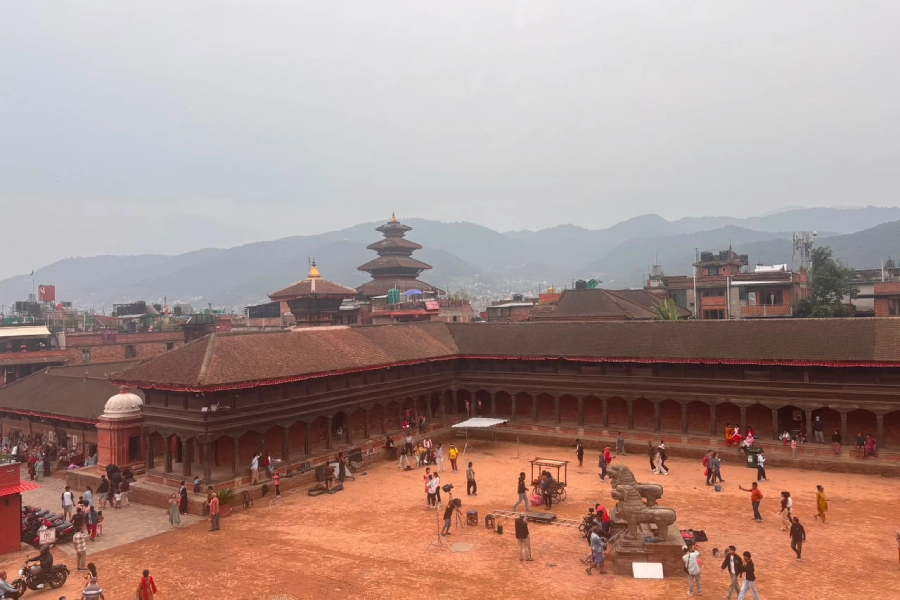
Two days in the valley is usually right. Built one morning with no schedule, the quieter courtyards behind Patan's main square and the back lanes of Bhaktapur tend to deliver the best moments, and none of them appear in an itinerary.
Pokhara: The Luxury of Peacefulness
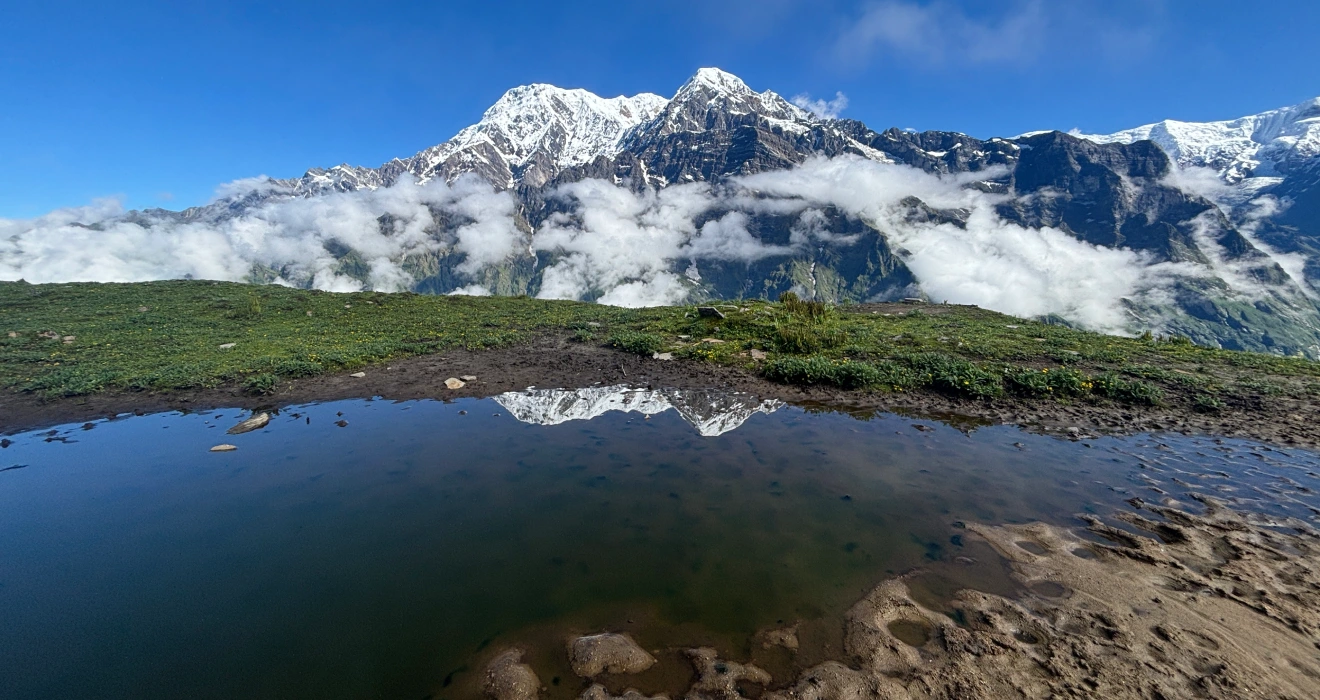
After Kathmandu's depth and whatever the trail demanded, Pokhara is where the trip exhales. The metropolis stretches alongside the northern shore of Fewa Lake. The Annapurna variety sits directly at the back of it. On a clean morning, the reflection of Machapuchare in the water seems edited. It is not.
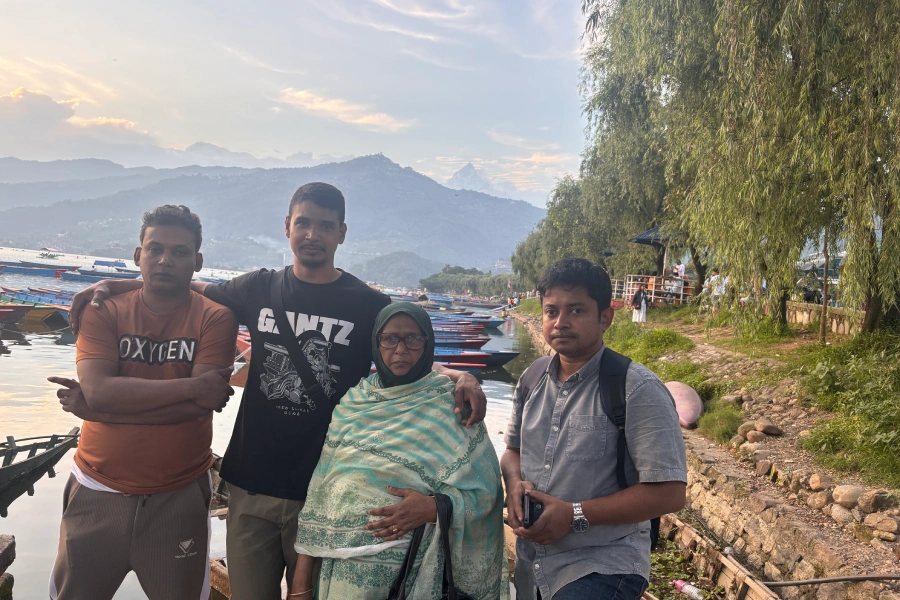
Most of what households do in Pokhara calls for nearly no attempt, which is exactly right at this stage in a journey. Renting a wooden rowboat at the lake for a morning, drifting to the small island temple in the middle, paddling back, it costs very little and continually ranks amongst families' favorite Pokhara memories. Meanwhile, the Sarangkot viewpoint at dawn supplies the full Annapurna and Dhaulagiri landscape without any trekking. A brief force from the lakeside puts you above the cloud stage before the peaks trap the first mild.
Davis Falls has a cave machine underneath it, Gupteshwor Mahadev Cave, which more youthful kids always find more thrilling than any temple they go to. The World Peace Pagoda, throughout the lake, rewards a quick boat journey and a twenty-minute climb with views that frame the entire valley. For young adults who have patiently controlled their lifestyle and tried, tandem paragliding from Sarangkot is the payoff. Twenty-five minutes over the lake with the Himalayas behind you. It's the aspect teens point out first when someone asks about their Nepal ride.
Lumbini: Where Gautam Buddha was Born
Getting to Lumbini takes effort. It's either a domestic flight or a 4 to 5-hour drive west from Chitwan. That's why most standard itineraries leave it out. We understand the logic. We still think it's the wrong call.
The birthplace of the historical Buddha is a UNESCO World Heritage Site and one of the quietest places in South Asia. The Sacred Garden at the centre holds the Maya Devi Temple, built directly over the excavated site of the birth. The visible archaeology around it, foundations from different building periods layered over centuries, rewards someone who takes thirty minutes to actually look at it rather than photograph it.
Beyond the garden, the International Monastery Zone extends outward for several kilometres. More than thirty countries each built their own monastery here: Tibetan gompa, Japanese pagoda, German meditation centre, Sri Lankan vihara, and Vietnamese temple. Cycling between them on flat paths with rented bicycles takes a full afternoon. Children who might fidget through a traditional heritage site find the sheer variety of architecture here genuinely interesting.
Two nights cover it comfortably. Folded into a western loop with Chitwan, Lumbini adds a quality to a family trip, a stillness, a historical scale, that the mountains deliver differently and the cities don't deliver at all.
When to Plan a Family Vacation in Nepal?
It's a different story when you plan a solo trip, but planning a family vacation is a completely different story. In Nepal, the weather and seasons make the most of the differences in the travelling experience. So, you shall certainly plan your visit in the best of seasons for the best experience for your family.
Here's what each season in Nepal feels like:
Autumn Season (October to November): The Sweetest of All
This is when Nepal feels the most “prepared”. The monsoon has just washed the whole thing smooth, so the air is crisp, the sky is reliably blue, and the mountain viewpoints stay open from early morning until late afternoon. The visibility in the Kathmandu valley or out on foot is first class. Temperatures in destinations sit quite simply, leaving it clear to mix a brief circle of kid-friendly walks with the natural world in Chitwan and some unhurried days exploring historical sites.
If you are planning a trip with multiple transfer parts, this is the window to prioritize. It’s additionally when most households that have flexibility tend to travel, simply due to the fact that the entire family works without compromise.
Spring (March to May): Colourful and Lively
Spring comes just after autumn, and in a few ways feels more alive. March is mainly nicely-balanced: clear mornings, manageable temperatures, and the first bursts of rhododendron along famous trails like Poon Hill. By April, the one blooms are in full swing, adding shade to the hillsides, although clouds tend to roll in earlier in the day at higher elevations.
By May, the lowlands start to warm up noticeably, especially around Chitwan and Lumbini, but hiking continues to be very workable in case you start early each day. If your journey dates are tied to school calendars, spring holds up properly; it’s a truly worthwhile time to be here, especially if you want your landscapes with a bit of extra colour.
Winter (December to February): Quieter and Trade-offs
Winter in Nepal is a piece greater selective in what it offers. Above 2,000 metres, it gets very cold, and a few higher trails turn out to be much less appealing for households. That said, Kathmandu, Chitwan, and Lumbini continue to be very comfortable at some point of the day, with clean skies and a ways fewer crowds.
It’s an amazing time for a slower-paced ride, think cultural exploration, wildlife safaris, and comfortable towns. Prices tend to soften, and the general enjoyment feels much less busy, even though you’ll need to prepare well for cold mornings and evenings.
Monsoon (June to August): Best Left for Later Visits
This is while Nepal turns lush and green, but it comes at a fee for first-time travelers. Heavy, steady rain makes hiking trails slippery and limits visibility, often hiding the mountains altogether. Travel plans can become unpredictable, especially if your itinerary depends on flights to or from mountainous areas.
Cultural sites continue to be open, and there’s a certain quiet attraction to the valleys throughout this time. If you aim to revel in Nepal’s landscapes at their best, it’s worth watching for a clearer season. If you want your family vacation in Nepal to be full of treks, we do not recommend choosing this season.
A simple way to decide
If you’re planning a vacation to Nepal with a bit of everything, light trekking, wildlife, and cultural time, October and November are hard to beat. Spring is a close alternative, especially March and early April, where you get clear views with the bonus of blooming trails. Winter works well for a more relaxed, low-altitude itinerary, while the monsoon is better saved for a return visit when you’re less focused on mountain views.
Practical Notes for Family Vacation in Nepal
Visas: Nepal offers tourist visas on arrival at Tribhuvan International Airport for most nationalities. Children under ten have historically entered free of charge. Nevertheless, confirm the current policy with Nepal's Department of Immigration before you travel; these things update.
Health: Get Hepatitis A and typhoid vaccinations before departure. Additionally, carry rehydration sachets, a solid first aid kit, and high-SPF sunscreen. UV intensity at altitude catches most people off guard. And get travel insurance that covers medical evacuation, this isn't optional on any trekking itinerary.
Food on the trail: Dal bhat is the staple, lentil soup over rice, vegetable sides, unlimited refills. Most teahouses also carry noodle soups, eggs in various ways, and basic Western options. Families with selective eaters generally manage better than they expect to.
Shoes: Buy hiking shoes early and break them in well before the trip. New footwear on day one of a Nepal trek is one of the most common and most avoidable problems we see each season.
Connectivity: Pick up an Ncell or NTC SIM card at the airport. Both networks cover the main cities and trekking corridors reliably. Above the lower villages, however, expect the signal to drop, which, for most families, turns out to be a welcome break.
How the Himalayan Ice Cap Team Plans a Family Vacation in Nepal
We don't use fixed packages for families because no two groups arrive with the same mix. Some families want the kids genuinely challenged on a trail. Others want a cultural circuit with a short walk built in so the children don't get restless. A multi-generational group with grandparents has different altitude limits and daily walking tolerances than a group of adults with teenagers in tow.
Beyond the structure, we bring specific local knowledge to the planning, which guide communicates well with children without talking down to them, which teahouse on the Poon Hill route runs the best kitchen, and where to build a rest day into Langtang if the weather looks unsettled. These details don't appear in any guidebook. They come from years on the same trails with groups in the same situations. And they're what separate a trip that works from one that nearly does.
If a family vacation in Nepal is something you're seriously considering, get in touch. We'll have an honest conversation about whether it's the right trip for your group and what the best version of it actually looks like.
Questions Families Ask the Most
Is Nepal a safe vacation destination for a family?
Yes, within the essential traveller regions. Kathmandu Valley, Pokhara, the Annapurna corridor, and Chitwan have hosted global households for decades. The infrastructure is stable, and the nearby subculture simply welcomes kids. The real concerns are meal hygiene, solar publicity, and altitude above 3,500m. None of these are hard to control with a piece of guidance and a manual from someone who is aware of what they're doing.
How old do kids need to be to trek in Nepal?
Five or six for the gentler routes, Dhampus, the Royal Trek, and Australian Camp. Eight to ten for Poon Hill. Ten and above for Langtang Valley. Altitude subjects more than age, though. Keep young youngsters underneath 3,500m, don't rush elevation advantage on consecutive days, and allow the manual name it as opposed to the schedule.
How long should a Nepal family vacation be?
10 to 14 days covers Kathmandu, a trail, Pokhara, and Chitwan without rushing. 7 days' work if you focus on one or two regions. Go shorter than that, and internal travel eats up too much of the time.
Can we combine trekking, wildlife, and culture in one family vacation to Nepal?
Yes, and most family itineraries here do exactly that. Kathmandu handles the culture. Pokhara plus a trail covers the mountainside. Chitwan delivers the wildlife. The three connect into a sensible geographic loop without backtracking. Adding Lumbini or Nagarkot extends the trip naturally if the schedule allows.
Is Chitwan right for children under five?
Licensed operators run the jeep safaris and canoe rides for children five and above. Under five, it depends on the child. The drives are long, and wildlife sightings demand patience; not every young child has it on a given day. Talk to us before booking, and we'll give you an honest read based on who's travelling.