
First Time Trekking in Nepal
Let's be honest with each other for a while here. If you are about to hit your first trek in Nepal, you certainly have read some blog posts, scrolled the Reddit threads, and watch as many YouTube videos as you could and should. All of these blogs and videos give the dramatic and beautiful side of the Everest Base Camp. To be honest, Everest Base Camp, actually, is not that dramatic and beautiful, and yes, people really do cry at 5,364 meters.
But there's a version of the trek that nobody talks about. The version where your knees start talking back on Day 4, where the tea house at 4,200 metres is colder than you thought cold could feel. Also, a version where you learn, privately and humblingly, that "I'm a pretty fit person" and "I can handle altitude" are two sentences that have almost nothing to do with each other.
This guide is for that version, the real one. The version you'll actually experience. And it's also about why, despite all of it, this will almost certainly be the best thing you've ever done.
Before Going Any Further: Which Trek Are You Actually Doing?
As of the latest data, Nepal has over 40 established trekking routes. Most first-timers arrive with one of three names lodged in their head: Everest Base Camp, Annapurna Base Camp, or Annapurna Circuit. All three are brilliant choices, but each requires very different preparation, budgets, and mental frameworks.
Here's a quick, honest read on each of these trekking packages:
Everest Base Camp Trek (15 Days)
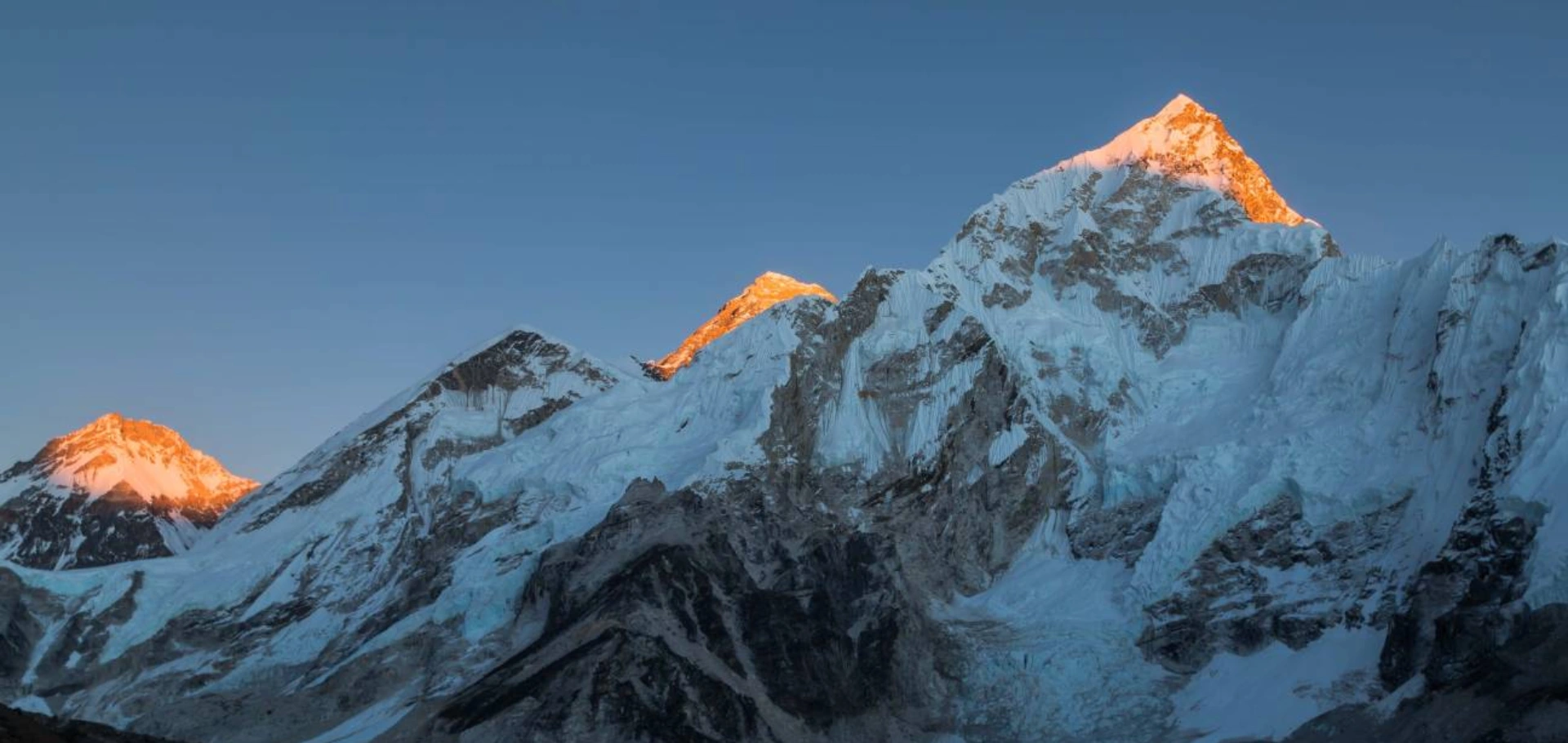
Certainly, the most iconic and famous trekking route in Nepal. Also, this trekking route sits as the most psychologically demanding, not because it's the hardest technically, but because the altitude is relentless and the hype is enormous. You will spend a couple of nights in Namche Bazaar before ascending higher. You will feel the weight of that altitude around Day 8.
Also, you will also stand below the Khumbu Icefall and feel genuinely small in the best possible way. For most first-timers who are reasonably fit and have time to acclimatise properly: absolutely doable. For people who want to rush it in 10 days to save money on flights: not advisable.
Annapurna Base Camp (ABC) - 13 Days
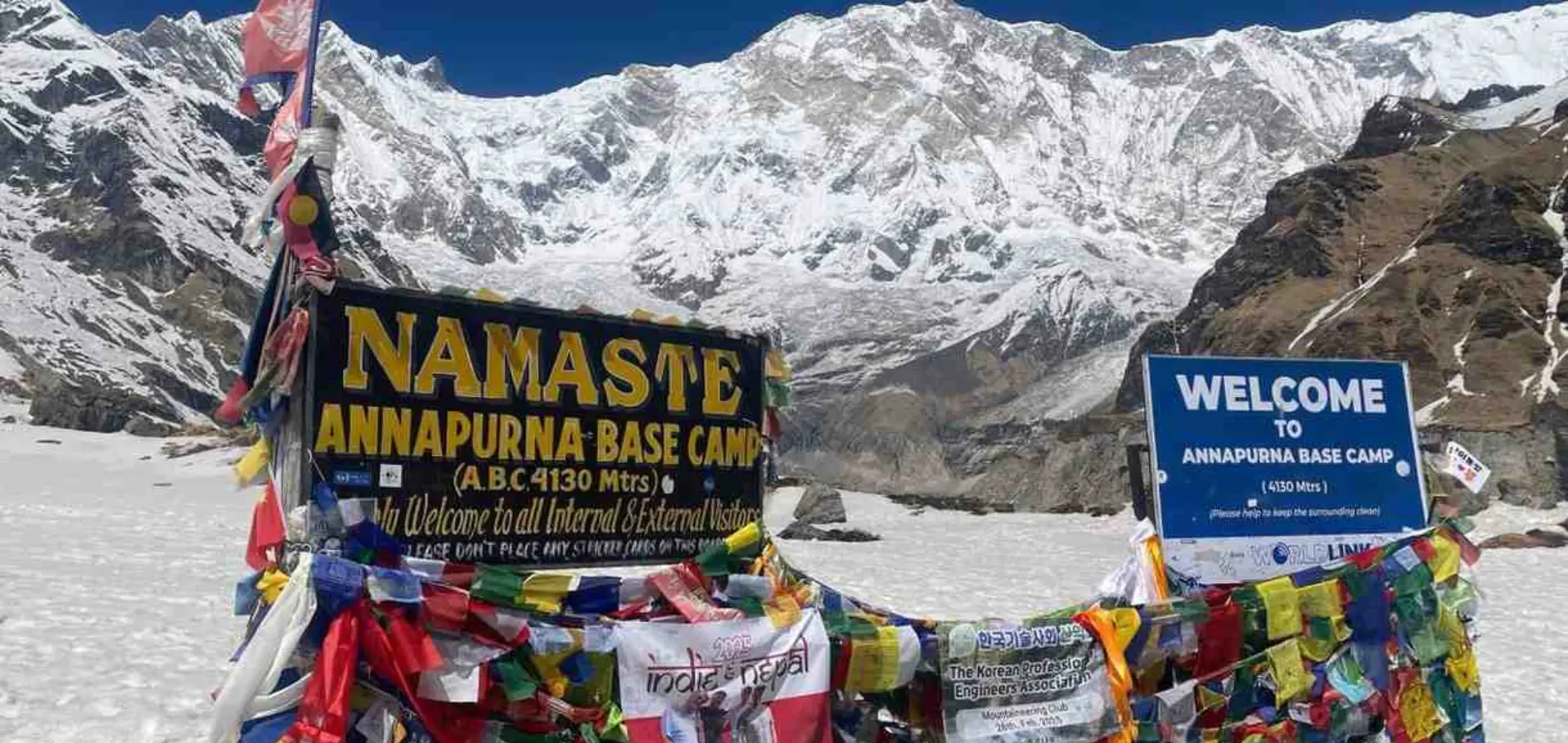
Lower maximum altitude (4,130m vs 5,364m), shorter duration, and, for many trekkers, even more visually spectacular, the amphitheatre of peaks surrounding the base camp is staggering. If you're short on time, doing a first Nepal trek before committing to EBC, or genuinely anxious about altitude, ABC is not the consolation prize. It's a world-class trek in its own right. Namche who?
Annapurna Circuit Trek - 13 Days
The full circuit is a different beast: a long, varied, culturally immersive traverse of the entire Annapurna massif, crossing the Thorong La pass at 5,416m. It's the right choice for trekkers who want diversity (rhododendron forests, high desert, riverside villages), have time to do it justice, and are genuinely comfortable with multi-week mountain travel. Rushing the circuit is the most common mistake we see.
Himalayan Ice Cap tip: If it's your first time in Nepal and you have fewer than 14 days, we'd almost always steer you toward Annapurna Base Camp. More days for the money, lower altitude risk, and an experience that won't feel compromised. If you have 16+ days and altitude doesn't concern you, EBC all the way.
The 12 Things Nobody Tells First-Time Trekkers (Until It's Too Late)
These aren't warnings designed to scare you off. They're the things our guides say at the Kathmandu briefing every single departure. The things experienced trekkers always nod at and first-timers always write down furiously.
Fitness and Altitude Acclimatization are completely different skills
Trekking in Nepal can sometimes be amazingly uncertain. There are cases of marathon runners returning from Dingboche. Meanwhile, these mountains have also seen 62-year-old first-timers waltz into Base Camp. Why is that? Well, that's because your cardiovascular fitness helps with the long days of walking but does nothing about how your body responds to thinner air.
Altitude sickness is a physiological event, not a willpower failure. It happens to the fit and the unfit equally. The only variable that matters is how slowly you ascend, and whether you're honest when symptoms arrive.
"Slow down" means actually slowing down, not 10% less fast
Every guide on every Nepali trekking trail will tell you the same thing: "Bistaarai Bistaarai," which means "slowly slowly." Most trekkers take this as a polite suggestion, but it isn't! Above 3,500 metres, the correct pace lets you hold a full conversation without breathing harder. If you can't speak a sentence without pausing for breath, you're moving too fast.
This is uncomfortable advice for people who associate fast with good. Accept it early, and your trek will be transformative. Ignore it, and your trek will end early.
The symptoms of altitude sickness are embarrassingly easy to miss
The textbook symptoms: headache, nausea, and dizziness, are obvious. What's trickier is the slow-onset fatigue that feels like jet lag. You might experience the slight shortness of breath that feels like being out of shape. Also, a lot of trekkers feel a mild headache that feels like dehydration. Trust us when we say that we have watched trekkers dismiss all three, decide they're just tired, and then feel dramatically worse overnight.
The rule is simple: if you feel off above 3,000 metres, tell your guide. Immediately. Not after dinner. Not in the morning. Now.
Tea houses are incredible, and nothing like what you're imagining
The tea houses (trekking lodges) along Nepal's major routes have improved dramatically in the last few decades. Many have heated dining rooms, reliable menus, charging points, and even Wi-Fi. What they are not: warm at 4 a.m. Plan for:
- Sleeping bags rated to at least -10°C, regardless of what the season is supposed to be.
- Squat toilets at higher altitudes.
- The dining room to be the warmest room by far, and your bedroom is to be significantly less so.
None of this diminishes the experience. It is, in fact, a large part of what makes waking up at 5,364 metres feel earned.
Your guide is not a walking GPS; they're the most valuable person on the mountain
A good Nepali trekking guide (like the ones provided by Himalayan Ice Cap) is many things at once. Based on the situation, they can become a navigator, an altitude monitor, a cultural interpreter, a tea-house negotiator, and an emergency decision-maker. Also, something they can become is the person who tells you the name of the peak you've been staring at for three days. Don't understand what the locals are saying? The guides are there to translate.
It all depends on the relationship you build with the guide. You know what's best to do? Well, just learn some Nepali words, ask questions, and listen to the stories. Remember, the mountains are just the backdrops; people are the experience.
A rest day is not a wasted day; it's the day your body banks altitude
The "climb high, sleep low" principle of acclimatisation is non-negotiable physiology. On an EBC trek, you'll have mandatory rest days in Namche Bazaar and Dingboche. First-timers often spend these days restless, bored, or guilty.
Experienced trekkers spend them on short hikes to higher viewpoints and then come back down to sleep, the correct approach. These days are not filler in the itinerary. They are the reason you make it to the top.
The weight of your pack will define your experience above 3,000 metres
Every kilogram you carry above the altitude of 3,000 meters is a kilogram fighting you. The difference between a 7kg day pack and a 14kg day pack is not subtle at altitude. It is the difference between looking around at the mountains and staring at the path, trying to survive each step. Most first-timers over-pack in one of the two ways:
- too many layers (you need fewer than you think, layered better) or
- too much tech (a camera, a backup battery, a tripod, a tablet)
Aim for under 10kg. Hire a porter for the rest. This is not laziness. This is allowing the mountains to be the point of the trip, not your endurance.
What you eat matters more than what you've been told
At altitude, your appetite suppresses before your energy demands do. You will not feel hungry. You will need to eat anyway. Dal bhat, the traditional Nepali rice, lentil, and vegetable dish, is not just the cheapest option on the menu. It comes with unlimited refills, is specifically calorically dense in the way altitude trekking requires, and is prepared fresh.
It is, genuinely, the medically superior meal on the trail. Trekkers who eat Western food at altitude (pasta, pizza, sandwiches) consistently report more fatigue. Eat what the mountain is offering you.
The people you meet will matter as much as the places
There is a phenomenon that happens around Day 5 on most Nepal treks. You've been walking with the same group of strangers, or alongside different groups at different stages, and something shifts. You're no longer tourists passing each other.
You're people sharing something genuinely hard in genuinely beautiful surroundings, and the conversations that happen in tea house dining rooms at altitude, over butter tea and fried rice, are some of the most honest conversations you'll have with strangers in your life.
Travel insurance is not optional; it is the most important thing you book
A helicopter rescue from the Khumbu costs between $4,000 and $7,000 USD. This is not a rare or dramatic scenario. People are evacuated from Nepal treks every single week, for injuries or cardiac events. Our travel insurance needs to explicitly cover high-altitude trekking (above 4,000m) and helicopter evacuation. Many standard travel policies do not. Check the altitude ceiling before you travel. If it says 4,000m and you're going to 5,364m, you are not covered.
You don't have to make it to the top to have the experience of your life
This is one we say most carefully, and most sincerely. Every year, trekkers push past warning signs, from their guides, from their bodies, because turning back feels like failure. It isn't. The Khumbu Valley at 4,000 metres is staggeringly beautiful.
Namche Bazaar on a clear afternoon, with the white arc of Kongde Ri behind it, is an image that stays with you for the rest of your life. A responsible decision to descend when your body needs it is not defeat. It's the choice that brings you back for the second trek. We'd rather you come back than push on and not.
How you trek matters, not just where
Nepal's trekking corridors are facing real environmental pressures: single-use plastic waste, overtourism in peak season, and the economic inequality between Kathmandu and mountain communities. Small choices compound: refusing plastic bottles in favour of a filter or UV pen, using the refuse stations rather than trail-side disposal, tipping your guide and porter well, staying in locally owned lodges rather than chains.
These aren't gestures. The Khumbu's ecology and the communities that depend on it are genuinely shaped by how each trekker moves through them. Himalayan Icecap's responsible tourism commitment isn't a policy document; it's the reason we were founded.
Understanding Altitude: A Simple Breakdown by Elevation
Here's where you'll be on the EBC route at each stage, and what your body is most likely doing at each altitude.
Kathmandu/Lukla arrival (1,400m - 2,860m)
Your body starts producing extra red blood cells here. No noticeable symptoms for most people. Sleep well, hydrate, don't rush.
Namche Bazaar (3,440m)
This is where altitude effects become real for many people. You'll spend 2–3 nights here. Mild headache, disrupted sleep, and breathlessness on hills are normal. Severe headache, vomiting, or confusion: tell your guide immediately.
Dingboche/Pheriche (4,250m-4,370m)
The toughest acclimatisation zone. Nights feel long, appetite fades, and some trekkers experience vivid dreams or insomnia. The rest of the day here is non-negotiable. This is where the trip is won or lost.
Gorakshep (5,164m)
The last tea house before EBC. Sleep here is difficult for almost everyone, with headaches, restless nights, and a cold that no sleeping bag fully solves. One night only.
Everest Base Camp (5,364m)
You're breathing roughly half the oxygen available at sea level. The walk from Gorak Shep takes 2-3 hours. Many trekkers feel their best of the entire trip here; the body has adapted, and the adrenaline of arrival is real and justified.
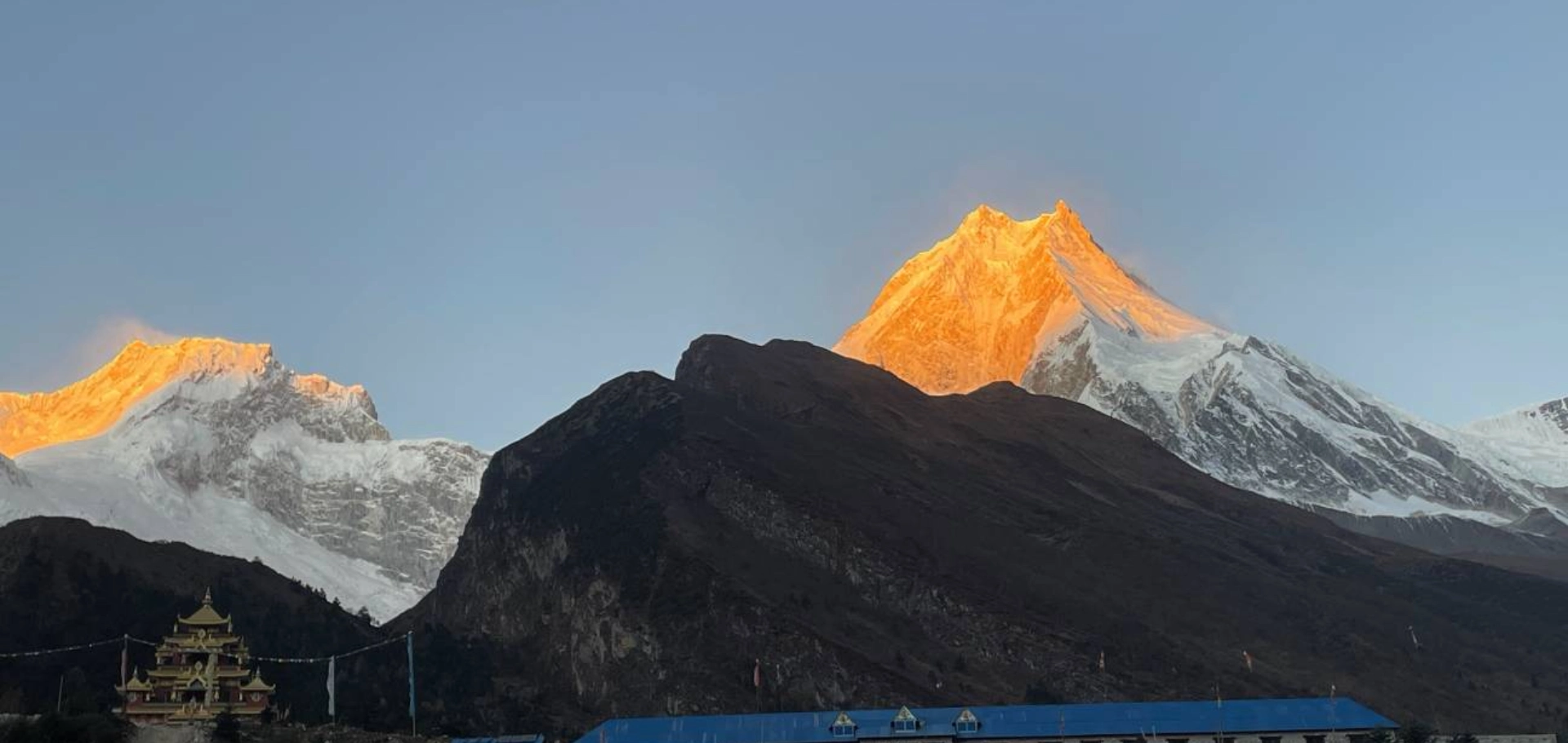
This is just an example, but the understanding altitude is not limited to the Everest Base Camp Trek. Whether you plan the Annapurna trekking route or the Manaslu trekking route, altitude should always be considered.
Five Moments That Will Genuinely Stop You
No amount of reading prepares you for these. We include them here not to spoil anything, but because knowing they're coming means you'll actually stop and feel them rather than walk past.
The first morning, the mountains reveal themselves
It happens differently in every route. On EBC, its Everest Everest appears above the Tengboche ridgeline, on ABC, it's the sudden amphitheatre of Annapurna I, II, III, and Machhapuchhre enclosing you all at once at 4,130 metres. Whereas, on the Circuit, it's cresting Thorong La at dawn with the entire Mustang plateau dropping away below you. The scale is always the same, bigger than you thought possible, quieter than you thought anything that size could be.
A village that has nothing to do with tourism
Somewhere between Day 3 and Day 6 on any Nepal trek, you'll pass through a settlement that exists entirely outside the trekking economy. Children going to school, women carrying firewood in a doko basket, a monastery with butter lamps still burning from the morning puja. Seriously, nothing here is for you, and that's exactly why it stays with you.
The Annapurna sanctuary at first light (ABC route)
The amphitheatre of peaks surrounding Annapurna Base Camp is one of the most enclosed, overwhelming mountain environments on earth. At sunrise, the south face of Annapurna I, the deadliest mountain in the world by ascent fatality rate, turns from grey to gold in under four minutes. Most trekkers don't speak for a while after.
Namche Bazaar on a Saturday morning (EBC route)
The weekly market fills the natural amphitheatre of the town. Yak herders, local traders, trekkers, monks, and an entire high-altitude economy doing its weekly business at 3,440 metres. It's the moment most people realise this isn't a trek through a backdrop. Some people live here.
The last day walking out, any route, every time
Something has changed in you, and you know it, and you're not sure yet what to do with that. Most people are quieter on the way back down. Some people cry, privately, when they think no one is looking. That's not a weakness. That's the entire point of coming here.
Frequently Asked Questions from First-Time Trekkers
Do I need previous trekking experience to do EBC or ABC?
No formal experience is required, but you need to be realistic about your fitness level. You'll be walking 5–7 hours per day for 12–16 days, often on uneven terrain at altitude. The most important preparation is cardiovascular fitness built over at least 8–12 weeks before the trek: long walks with a loaded pack, stair climbing, and sustained aerobic exercise.
What is the best time of the year to trek in Nepal?
The two peak seasons are spring (March to May) and autumn (September to November). Both offer clear skies, stable weather, and excellent visibility. Spring has the bonus of rhododendron forests in full bloom below 3,500m; the trail from Lukla to Namche in April is extraordinary. Autumn tends to be slightly clearer and less crowded. Winter (December to February) is cold but surprisingly feasible; the trails are quieter, the skies are crystal clear, and the snow-capped peaks are at their most dramatic.
How much should I budget to tip my guide or porter?
Tipping is standard, expected, and genuinely meaningful to the people who carry your bags and keep you safe in the mountains. The general guideline for a full EBC trek is USD $100–$150 for your lead guide, and $50–$80 per porter. If you have an assistant guide, budget similarly to a porter.
Can I get altitude sickness even if I am very fit?
Yes, and its the most important sentence in this entire blog. Altitude sickness is not correlated with fitness level. It is determined by your individual physiology, your rate of ascent, and your hydration. Elite athletes get acute mountain sickness. Sedentary people sometimes acclimatise perfectly. The only factors within your control are ascend slowly, drink 3–4 liters of water daily, eat regularly even when you don't feel hungry, sleep at a lower altitude than your highest point each day, and communicate any symptoms to your guide immediately.
What happens if I need to be evacuated?
Helicopter evacuation is available from most points on the major Nepal trekking routes, even at Base Camp, via agencies in Kathmandu. A full evacuation typically costs USD $4,000–$7,000 depending on altitude and destination. This is why travel insurance that explicitly covers high-altitude trekking and helicopter evacuation is non-negotiable. Himalayan Icecap operates a 24/7 emergency line that connects trekkers and guides directly to Kathmandu support for any evacuation or medical coordination. When you're trekking with us, you are never managing an emergency alone.
What about the food and accommodation on Nepali trekking trails?
The trekkers do not have to compromise on the quality of food and accommodation in any of the Nepal's trekking trails. Accommodation is arranged in well-maintained hotels or lodges that offer high-quality, hygienic, home-cooked, organic food perfect for your physical requirements throughout the trail.
Ready To Go?
Your first trek in Nepal starts with a single question. Tell us your timeframe, your fitness level, and what kind of experience you're after. Our team in Kathmandu will build the right trek around you, not the other way around.
Contact us now for further details or view our trekking packages to know what you can get with Himalayan Ice Cap!