
Top Highlights

Trip Duration
14 Day

Max Altitute
5106m

Best Season
September-November to March-May

Trip Grade
Moderate

Group Size
2-20

Trek start-Ending place
Kathmandu- Besisahar

Meal
B. L. D.

Region
Manaslu Region
Manaslu Cicuit Trek Highlights
- A chance to trek on the Manaslu Circuit for 12 straight days.
- Scenic drive from Kathmandu's chaos to Machha Khola, a village with mountain serenity.
- Walk past several traditional villages, including Jagat, Deng, and Namrung, that showcase Tibetan-influenced architecture and culture.
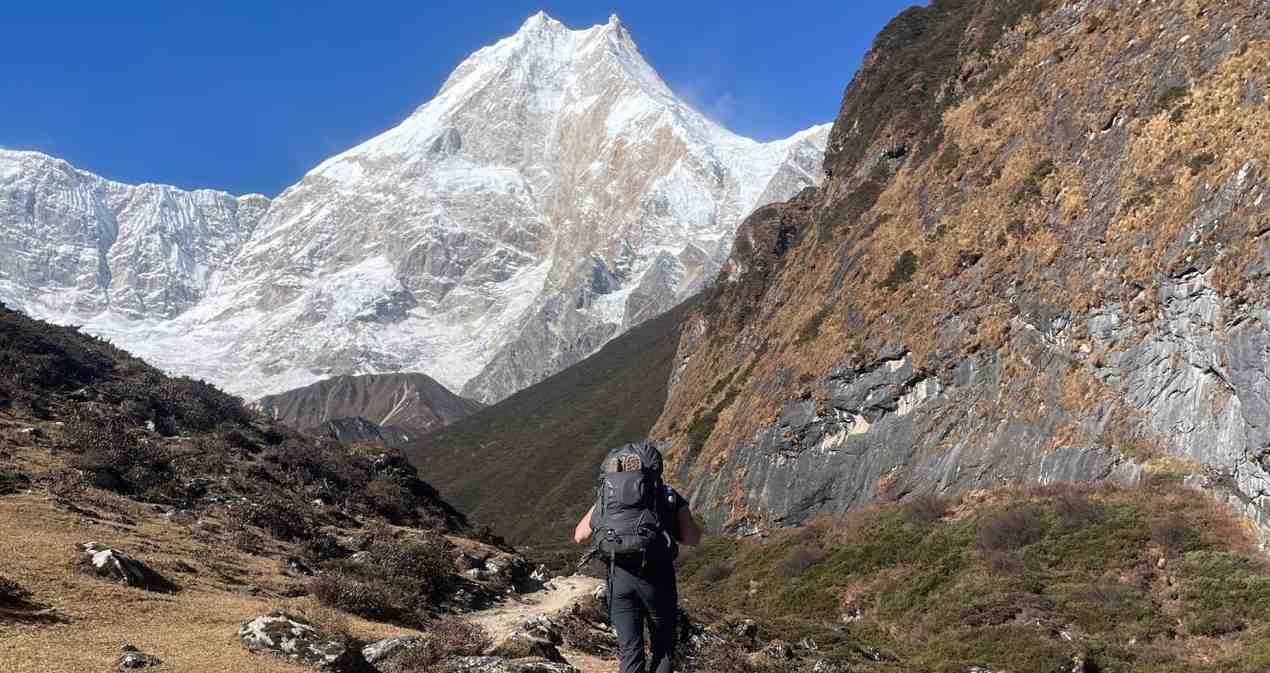
- Breathtaking views of Mount Manaslu (8,163m) throughout the upper sections of the trek.
- Visit Pungen Gompa, a serene monastery with panoramic views of Manaslu.
- Chance to cross Larkya La Pass (5,106m), one of the highest passes in Nepal's Himalayan region.
- Spot and witness some endangered wildlife like blue sheep and Himalayan marmots in the Manaslu Conservation Area.
- Walk on a less crowded trail that offers an exclusive sense of peace and isolation, away from the chaos of urban settlements.
Manaslu Circuit Trek Overview
The Manaslu Circuit Trek is one of Nepal's most remarkable off-the-beaten-path adventures, tracing a remote trail around Mount Manaslu (8,163m). Being a journey to the eighth-highest peak in the world, the trek to the Manaslu Circuit offers a perfect blend of raw Himalayan beauty, cultural richness, and physical challenge. Additionally, this 14-day trekking trail is an ideal choice for those seeking a more secluded alternative to the busier Everest Base Camp Trek 14 Days, Langtang Valley, and Annapurna Circuit Trek.
The trek to Manaslu Base Camp with the Himalayan Ice Cap begins upon arrival at Tribhuvan International Airport in Kathmandu. From here, we go for a scenic drive to Machha Khola, the starting point of the Manaslu Circuit Trekking journey. After spending a night in Machha Khola, our walking journey begins as we make our way through different traditional villages, like Jagat, Deng, and Namrung. In all of these villages, the trekkers can encounter a landscape that shifts dramatically from subtropical forest to alpine wilderness. Furthermore, all of these villages also help you witness the living traditions of the Gurung, Tibetan, and Nubri communities.
As you walk further and reach higher on the trail, you can witness the cultural and visual highlights intensifying. We will have an acclimatization day at Samagaun before ascending further towards the Manaslu Base Camp, located at an altitude of 4,800 meters above sea level. However, that's not the highest point of the Manaslu Circuit Trek, as we will push higher to the Larkya La Pass, a mountain pass located 5,106 meters above sea level. After that, we descend back from the trail and return to Kathmandu before you head on to your home or go for another adventure in Nepal.
Why Choose Himalayan Ice Cap?
Himalayan Ice Cap is not just any ordinary trekking agency in Nepal; we are the passionate explorers who live and breathe the Himalayas. With several years of experience crafting high-altitude adventures, we offer personalized service, local expertise, and a deep respect for both nature and culture. Here are the reasons why we recommend trekkers choose the Himalayan Ice Cap for the Manaslu Circuit Trek:
Himalayan Ice Cap is a team of seasoned, experienced, and licensed guides and office staff. That being said, our team offers personalised service, local expertise, and a deep respect for both nature and culture.
- We also ensure that the trekkers get a tailored experience every day throughout the itinerary.
- The Himalayan Ice Cap team offers no hidden costs; whatever you see is the cost you pay for this specific package.
- In addition to the Manaslu Circuit Trek, we offer various trekking and tour packages in Nepal for adventure enthusiasts.
- Our team ensures proper food and accommodation facilities throughout the trek. This means you can expect cozy and hygienic rooms offering healthy, nutritious, and fresh food.
- We do not leave anyone behind. Even if there are instances where one or a few of the trekkers cannot continue the walk, the Himalayan Ice Cap team makes sure to arrange a proper evacuation plan before proceeding further.
Manaslu Circuit Trek Permits
- Manaslu Restricted Area Permit (MRAP)
- Manaslu Conservation Area Permit (MCAP)
- Annapurna Conservation Area Permit (ACAP)
- Trekkers' Information Management System (TIMS)
To know further about these permits, their cost, and how you can obtain these permits, feel free to contact the Himalayan Ice Cap team. Furthermore, if you book the package with us, our local representatives will also assist you in obtaining all of these permits.
Embarking on the Manaslu Circuit Trek requires trekkers to obtain specific permits. Without these permits, authorities at certain checkpoints will not allow you to enter certain territories during the Manaslu Circuit Trek. Here are the permits that you need to obtain for the Manaslu Circuit Trek:
Best Season for the Manaslu Circuit Trek
The best seasons for the Manaslu Circuit Trek are spring (March to May) and autumn (September to November). These seasons offer the most stable weather, clear mountain views, and optimal trail conditions, making your trekking experience more rewarding and safe. Besides, the spring season also offers rhododendron blossoms, lush greenery, and longer daylight hours, bringing the trail to life. Other than that, it's also a great time for spotting wildlife and enjoying the contrast of snow-capped peaks against vibrant floral landscapes.
Well, Autumn is another season widely regarded as the prime season for trekking in Nepal. It comes just after the monsoon season and brings a crisp, blue sky with excellent visibility of Manaslu (8,163m) and the surrounding Himalayan range. Moreover, you can also expect ideal temperatures during this season (cool in the mornings and evenings). Besides, autumn also brings with it the festive atmosphere of major Nepali festivals like Dashain and Tihar. So, if you choose this season, you can also celebrate these festivals and enjoy a traditional and religious time in the Himalayas of Nepal.
Trekking during the winter (December to February) or monsoon (June to August) is generally not recommended. Snow can block high passes like Larkya La, and heavy rainfall during the monsoon can make trails slippery and prone to landslides. For the best experience in terms of safety, scenery, and trail conditions, spring and autumn remain the most favorable seasons for the Manaslu Circuit Trek.
Manaslu Circuit Trek Difficulty Level
The Manaslu Circuit Trek is considered a moderately to highly challenging trek, suitable for trekkers with a good level of physical fitness and some prior experience in high-altitude trekking. Covering remote terrain and reaching an altitude of 5,106 meters at Larkya La Pass, the route demands both physical endurance and mental resilience. Besides, the trekkers will also have to walk for about 5 to 7 hours almost every day.
During such a high-altitude ascent, altitude sickness can be a major factor in difficulty. Therefore, we have designed our entire trekking package with a gradual gain in elevation, allowing trekkers to acclimatize properly. Furthermore, the remoteness of the region also adds to the challenge, as facilities are basic, and evacuation options in case of emergencies are limited. With all this being said, we want trekkers to know that with proper preparation, a steady pace, and guidance from experienced trekking staff, the Manaslu Circuit is a rewarding and achievable adventure. However, it can get difficult if you do not take these precautions seriously.
Manaslu Circuit Trek Cost
| Number of Trekkers | starting Price | inquiry |
| 2 to 3 | 1000 USD | WhatsApps |
| 4 to 6 | 950 USD | WhatsApps |
| 7 to 10 | 850 USD | WhatsApps |
| 11 to 15 | 750 USD | WhatsApps |
| 16 to 20 | 650 USD | WhatsApps |
Preparation for Manaslu Circuit Trek
Preparing for the Manaslu Circuit Trek is crucial for a safe, enjoyable, and successful journey through one of Nepal’s most remote and rewarding trekking routes. To overcome all the difficulties one can face, trekkers must focus on physical readiness, proper gear, and mental preparation.
Here, we have listed some of the major preparations that one must do for the Manaslu Circuit Trekking trail:
Physical Preparation
- Start training 2–3 months in advance with a mix of cardio (running, swimming, cycling) and strength training (especially legs and core).
- Practice regular hikes with a loaded backpack to simulate trail conditions and build endurance.
- Train for elevation gain by hiking uphill or using stair machines to prepare for altitude and steep ascents.
Gear & Equipment
- Invest in proper trekking gear, including waterproof hiking boots, moisture-wicking layers, a down jacket, and thermal wear.
- Carry a sleeping bag rated for at least -10°C (14°F), especially for nights at higher altitudes.
- Use trekking poles to ease knee stress and provide balance on rocky paths.
Health & Safety
- Acclimatize properly by following a gradual ascent schedule; don’t skip acclimatization days.
- Carry a personal first aid kit, including altitude sickness medication (like Diamox), rehydration salts, and blister care.
- Stay hydrated and use water purification tablets or filters since safe drinking water isn’t always available.
Permits & Documentation
- Secure the required permits: Manaslu Restricted Area Permit, Manaslu Conservation Area Permit (MCAP), and Annapurna Conservation Area Permit (ACAP).
- Bring multiple passport-sized photos and a few copies of your passport for permits and checkpoints.
Mental Preparation
- Prepare for basic conditions as there is limited electricity, cold nights, simple food, and minimal connectivity.
- Be flexible and patient, as weather or trail conditions can change plans unexpectedly.
- Learn some Nepali phrases and basic etiquette to connect better with locals and respect their culture.
Manaslu Circuit Trek Packing List
To go on any trekking adventures, including the Manaslu Circuit Trek, trekkers must pack very smartly. This is important due to its remote location, varied climate zones, and limited access to modern amenities along the trail. Besides, the trail also led us from lowland river valleys to alpine heights over 5,100 meters. Therefore, your gear must handle a wide range of temperatures and conditions.
Check out the detailed packing list broken down into key categories to help you stay warm, safe, and comfortable:
Clothing
- 2–3 moisture-wicking T-shirts (synthetic or merino wool)
- 2 thermal tops and bottoms (for cold nights)
- 1 fleece or soft-shell jacket
- 1 lightweight down or insulated jacket
- Waterproof and windproof shell jacket
- Waterproof trekking pants
- 2 pairs of trekking trousers
- 1 pair of warm thermal pants
- 1 pair of comfortable camp pants or joggers
- 4–5 pairs of moisture-wicking underwear
- 4–5 pairs of wool or synthetic trekking socks
- Warm hat/beanie, sun hat, buff, or neck gaiter
- Gloves: 1 inner liner + 1 warm, waterproof outer pair
Personal Items & Toiletries
- Quick-dry towel
- Toothbrush, biodegradable toothpaste
- Biodegradable soap & shampoo
- Wet wipes, hand sanitizer
- Lip balm with SPF
- Sunscreen (SPF 30+)
- Toilet paper & small trowel
- Menstrual hygiene products (as needed)
- Nail clippers, small mirror (optional)
- First Aid & Health
- Blister treatment (Compeed or Moleskin)
- Band-aids, antiseptic cream, and bandages
- Painkillers (paracetamol/ibuprofen)
- Anti-diarrheal (e.g., Imodium)
- Oral rehydration salts
- Altitude medication (e.g., Diamox – consult doctor)
- Personal medications
- Insect repellent (especially for lower altitudes)
- Water purification tablets or a water filter bottle
Electronics, Documents & Essentials
- Headlamp with spare batteries
- Power bank or solar charger
- Universal adapter (Type C, D, or M plugs for Nepal)
- Smartphone or camera
- Trekking map or GPS app
- Passport with multiple photocopies
- Extra passport-sized photos (for permits)
- Copies of travel insurance and trekking permits (MCAP, ACAP, RAP)
- Pen, notebook, or travel journal
- Cash in NPR (no ATMs after Arughat/Soti Khola)
Booking the Manaslu Circuit Trek with Himalayan Icecap
Booking the Manaslu Circuit Trek with Himalayan Ice Cap ensures a seamless, enriching, and well-organized adventure into one of Nepal’s most captivating trekking regions. As one of the trusted local trekking agencies with extensive experience and expertise in high-altitude trekking, the Himalayan Ice Cap team provides expert guidance, logistical support, and personalized service that takes the stress out of planning.
Booking the Manaslu Circuit Trekking package with us also ensures that you secure the necessary restricted area permits, arrange transportation, accommodations, and walk with some of the exceptionally talented and seasoned Sherpa guides. If you have any questions or concerns regarding the Manaslu Circuit Trekking package or any of our services, please don't hesitate to contact us.
Itinerary
The Manaslu Circuit Trek with Himalayan Ice Cap begins as you land in the Tribhuwan International Airport, Kathmandu. Our local representatives will receive you and then drive you to the hotel, where you will be welcomed with a refreshing juice. Check in to the room, freshen up, and the rest of the evening is yours.
You can stroll around the city, grab some drinks in the pub & bar, or relax in a spa or massage parlour. Besides, we recommend the trekkers to get a good sleep as we will begin our journey towards the Manaslu Circuit from the very next day.
As you wake up, have your breakfast, and get your backpack checked by the guides, we begin a journey towards the Manaslu region on Day 2. The drive to Machha Khola from Kathmandu traces the Prithvi Highway along winding mountain roads.
As we drive a little far from Kathmandu's city area, we pass through lush hillsides, terraced farmland, and vibrant roadside villages. Gradually, the road diverts the main highway toward the Gorkha region, offering scenic views of the Budhi Gandaki River as it carves its way through steep gorges.
Please note that this section of the drive can be bumpy in places, especially beyond Arughat. As you approach the end destination, Machha Khola, you can catch exclusive glimpses into the rural lifestyle of Nepal. This region consists of simple houses, prayer flags, and grazing cattle. Talking about Machha Khola, the village sits quietly and peacefully beside the Budhi Gandaki River.
Besides, this starting point of the Manaslu Circuit Trekking map offers a few teahouses with basic accommodation and hearty meals to rest and refuel. Take your time to stroll around the village and interact with the locals before heading for dinner and sleep.
After relaxing for a night in Machha Khola, we finally began a trekking journey on the Manaslu Circuit Trek trail. Today, the trail makes its way from Machha Khola to Jagat, a village at an altitude of 1340 meters. Starting with some gentle ups and downs, we gradually walk along a narrow trail carved into hillsides. Besides, we also need to cross multiple suspension bridges today.
In a short time, we will find ourselves passing through tropical forests and then past some small Gurung and Tamang settlements. Tatopani sits as one of the major checkpoints on today's journey. Here, the trekkers can take a relaxing dip in the natural hot water spring before ascending further. After this, the terrain includes steep climbs and descents, along with exceptional views of waterfalls, rural life, and the landscapes.
In about 5 to 6 hours after leaving Maccha Khola, we will arrive in Jagat. This village, known as the checkpoint to the Manaslu Conservation Area, has traditional houses, terraced fields, and a beautiful integration of Tibetan Buddhist culture. We will have dinner and spend a night here before ascending further.
Day 4: Jagat (1,340m) to Deng (1,860m) 5-6hrs Another day calls for another adventurous walk in the Manaslu Circuit Trekking map as we leave Jagat for Deng. This section of the trail climbs over rocky ridges and descends into lush valleys.
Besides, we also get a chance to visit some beautiful villages, including Salleri and Philim, while encountering impressive cliffside trails carved out over the river. Besides, this section of the trek to Manaslu Circuit starts becoming more dramatic as we enter narrower gorges.
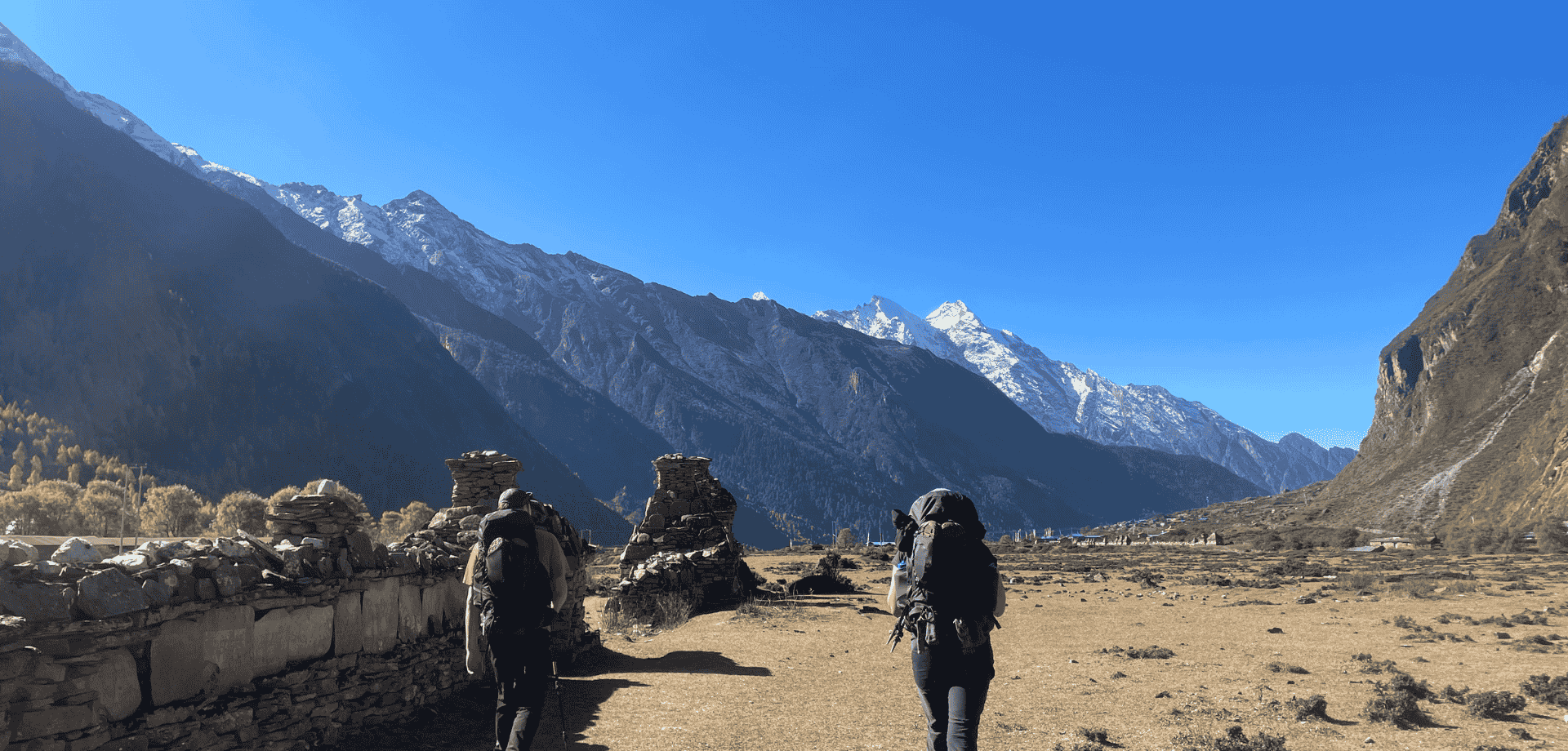
In about 5 to 6 hours, we finally reach Deng, a beautifully decorated village located at an altitude of 1860 meters above sea level. Besides, this village also marks the gateway to the culturally Tibetan region of the upper Manaslu area. Here, we can meet and interact with people who are more towards the Tibetan ethnicity and follow Buddhism as their religion. For that reason, this village also has different Buddhist chortens and Mani Walls.
We are slowly and gradually approaching the alpine parts of the Manaslu Circuit Trekking map. On the fifth day, our journey goes to Namrung from Deng. This section of the Manaslu Circuit Trek climbs steadily through forests of pine and fir, passing alpine hamlets like Rana and Bihi Phedi.
Along the way, we also get to witness significant changes in both scenery and culture. Walk a little further from Deng, and the narrow gorges change into a wide valley, and the Tibetan influence becomes stronger. Nevertheless, we also get chances to walk through some waterfalls and across some glacial streams before passing through intricately carved gates known as kani.
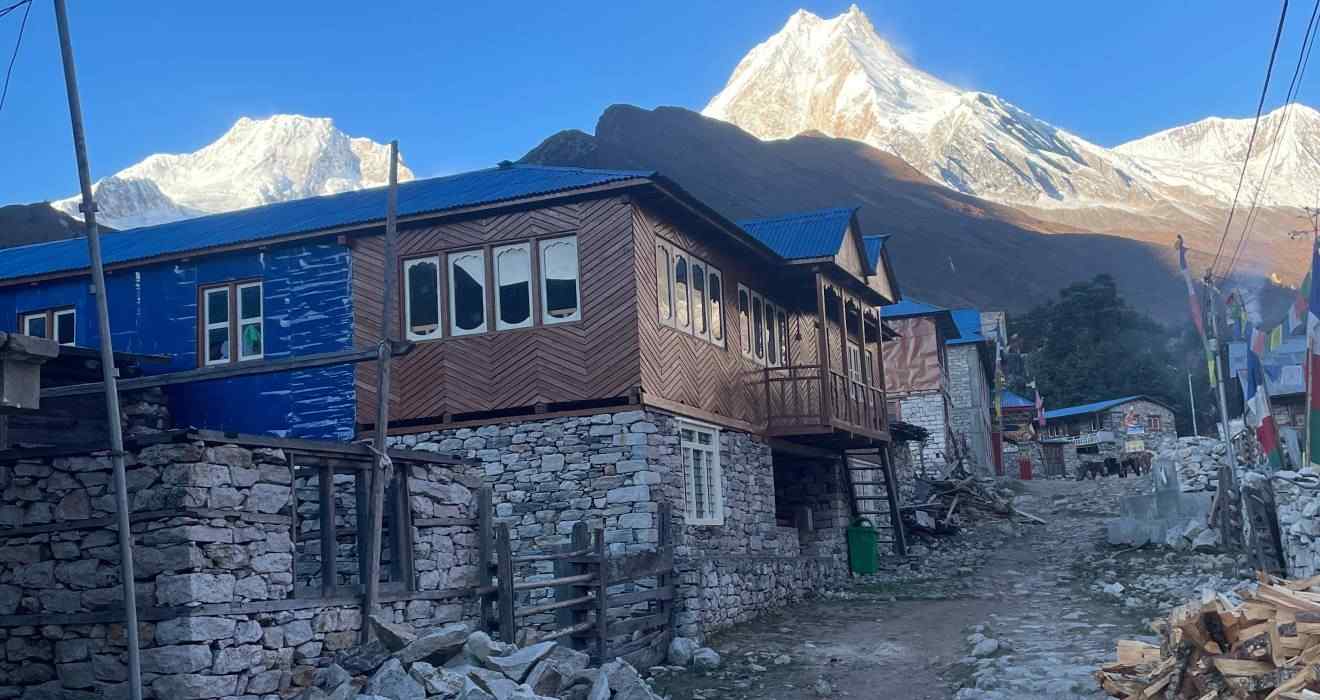
The final destination of the day, Namrung, sits peacefully at an altitude of 2630 meters above sea level. Here, the trekkers can witness beautifully designed and built stone houses and a settlement surrounded by green forest with snow-capped peaks as the background.
Just imagine how beautiful this might look! Sipping a cup of tea while witnessing the mesmerizing views of mountains like Ganesh Himal and Himalchuli, that's what Namrung offers to us. Besides, you can also visit some monasteries in the evening to learn more about the Buddhist tradition and religion.
It's high time for the trekkers to be aware of the altitude sickness risks as we ascend above 3000 meters today. Yes, today's journey takes us to the Shyala village, located at an altitude of 3500 meters above sea level. As we leave Namrung, the trail rises gently through lush forests and picturesque fields dotted with chortens and prayer flags. As we ascend higher on the trail, the views of the Manaslu Massif become increasingly dramatic. Furthermore, we also make our way through several beautiful and peaceful villages, including Lihi, Sho, and Lho.
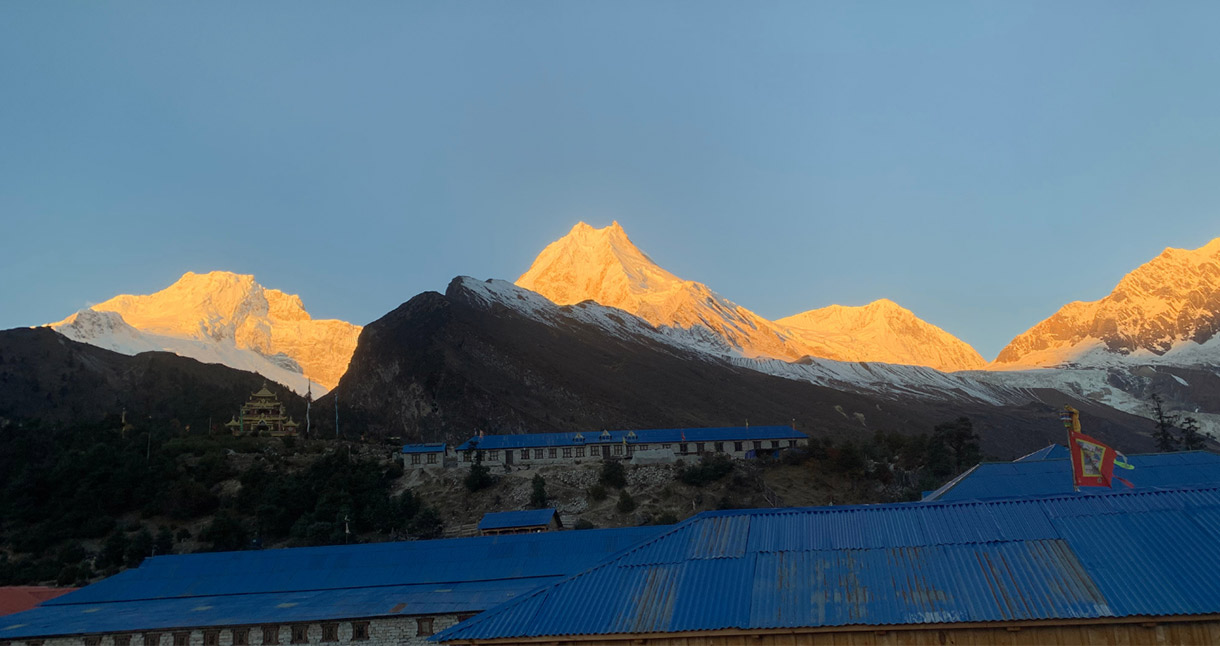
As we reach Shyala, a village located 3,500 meters above sea level, the air starts getting thinner while the surrounding peaks seem to grow. Besides, some epic peaks, including Manaslu, Himalchuli, and Ngadi Chuli, also surround the village as if they protect this quiet settlement. Take your time to stroll around the village and interact with the locals before having a fulfilling dinner and, very importantly, rest for the night.
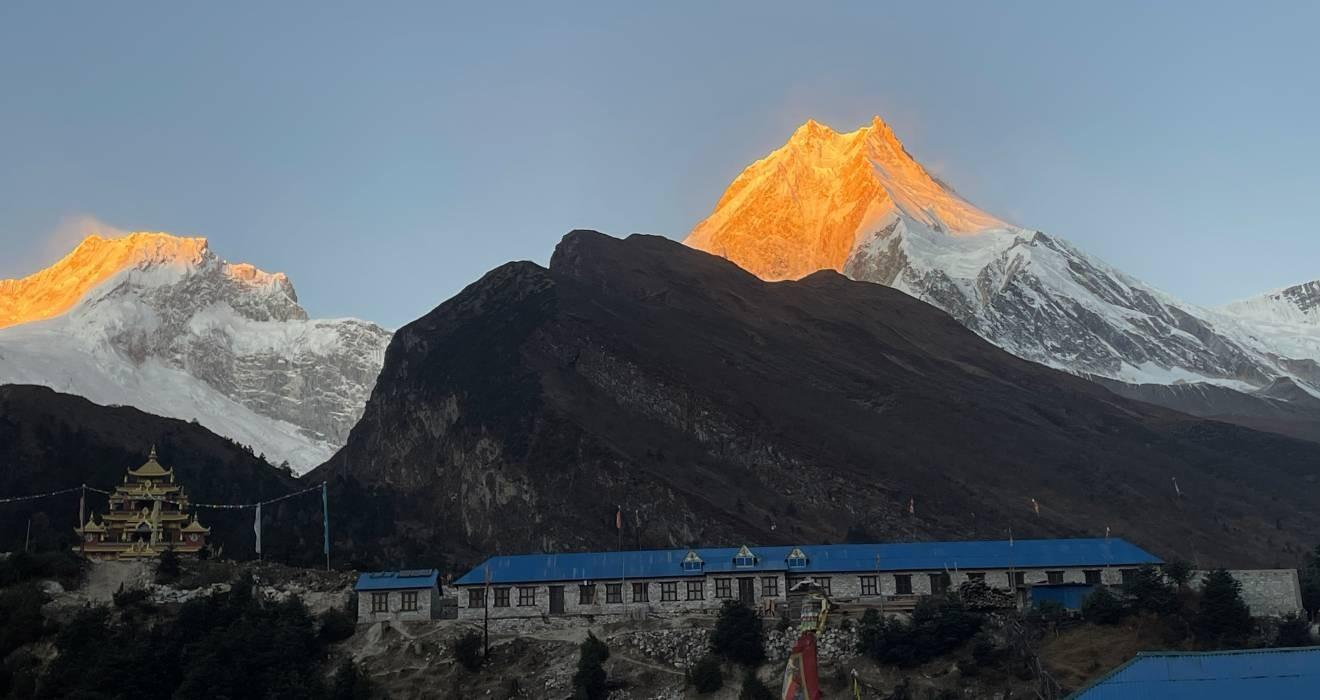
On the seventh day, we will first go for abreathtaking side hike to Punggen Gumba, a remote monastery perched at 4,000 meters above the sea level. This Gumba also offers a stunning view of the Manaslu's east face, along with a peaceful and religious experience in the monastery. Talking about the hike, it is steep but incredibly rewarding, which takes us through yak pastures and ancient pine forests. After we take our time to visit the Punggen Gumba, we descend towards Samagaun.
Samagaun is the largest village in the upper Manaslu region. Besides, this village also serves as a hub for trekkers heading to the base camp or the Larkya La Pass. Lying in a wide valley under the shadow of Manaslu, Samagaun offers incredible scenarios of traditional stone-built houses, herds of yaks grazing, and centuries-old monasteries. Besides, the calm energy of this place and its cultural richness also offer us a perfect place to spend the night before ascending further.
On the eighth day, we will not ascend any further and stay back for acclimatization in Samagaun. Besides, we will also be going for a quick hike to the Manaslu Base Camp. The trail from Samagaun to the base camp is steep and challenging, where we have to climb over moraines and glacier-fed streams. Furthermore, let us also tell you that it's going to be a strenuous hike to Manaslu Base Camp, but the spectacular scenery makes it worthwhile.
As you reach the Manaslu Base Camp, you can expect a surreal experience, where you get a chance to stand on the foot of the eighth-highest peak of the world. Besides, you can also see a lot of people setting up camp here and getting ready to summit the Manaslu Peak. After spending some worthwhile time in the base camp, we will return to Samagaun to have dinner and sleep for the night.
Finally, on the ninth day of the Manaslu Circuit Trek, we go for a relatively short and less taxing walk. As we begin the journey, the trail gently ascends along barren slopes and across glacial streams, with wide vistas opening up across the valley. Moreover, this section of the trail also takes us past some herds of blue sheep while we get chances to spot Himalayan marmots along the way.
Within just 3 to 4 hours, we will already be in the village named Samdo, our destination for the day. This windswept village, sitting at an altitude of 3860 meters, feels like a completely different world. Yes, the yak caravans, Tibetan-style homes, and the dry-stone walls make this village almost like a heavenly settlement.
To add more charm to all these, you can also watch the panoramic views of the Samdo peak and get glimpses of Tibet from here. Overnight stay, and dinner will be arranged by the Himalayan Ice Cap team in a tea house or lodge for the night.
Today, we will cover a short yet adventurous and adrenaline-rushing section of the Manaslu Circuit Trekking trail. Also, let you know that we are just one day away from crossing the Larkya La Pass, one of the highest passes in the Annapurna and Manaslu region. We begin the walk immediately after breakfast and climb through arid, rocky terrain and cross seasonal streams fed by melting snow. As we will be walking over 4000 meters above sea level, we can sense the air getting thinner. Therefore, we recommend the trekkers to go for a slow and steady pace.
Walking past a stark and beautiful landscape, past some prayer flags, and into different smaller settlements, we finally reach Dharamsala. This village, located at an altitude of 4460 meters above sea level, is also known as Larkya La Phedi. Here, the trekkers might face difficulties due to limited facilities and amenities. However, this village also provides shelter before the big pass crossing. Moreover, Dharmasala is also surrounded by snow and rock, which provide an atmospheric overnight stop. Make sure that you take proper rest
Finally, we have approached the most awaited day of the Manaslu Circuit Trek. On the eleventh day of this trek, we make our way towards the Larkya La Pass, located at an altitude of 5106 meters above sea level. We begin the trek to Larkya La Pass early in the dark, at around 3 to 4 in the morning. Why so? Well, that's to avoid strong afternoon winds at the pass and to get an outstanding sunrise view from the pass. The walk can certainly be difficult, so we recommend all the trekkers to keep a slow and steady pace. Besides, we can also see cairns and prayer flags mark the entire trail starting from Dharmasala to the Larkya La Pass.
As we reach the Larkya La Pass ( 5,160 meters), we are greeted by fluttering prayer flags and a signboard marking the pass. Besides, we will also get to see some outstanding sights of snow-capped peaks like Manaslu (8,163m), Cheo Himal, Himlung Himal, and Annapurna II. After spending some amazing time in the past, we begin a descent to Bimthang. Located at an altitude of 3700 meters, Bhimtang is a tranquil alpine valley surrounded by glacial peaks.
The name Bhimtang means "Plain of Sand" in Tibetan, and this expansive glacial basin was once a yak pasture and seasonal trading post. While at Bhimtang, we can take a short walk to the edge of the Ponkar Glacier or soak in views of Lamjung Himal and Kechakyu Himal. In the evening, you can stroll around the village and interact with the locals before heading to the hotel for dinner and a cozy sleep.
After so many days ascending on the Manaslu Circuit Trek, it's time for us to descend and return. As we have some delicious breakfast in the hotel, the guides lead us steadily through pristine forests filled with pine and rhododendron.
In a little while, we can experience the air becoming warmer and the greenery denser. Moreover, this section of the Manaslu Circuit Trekking trail crosses glacial rivers and passes through Yak Kharka and the small hamlets of Karche and Gho. Within the next 5 to 6 hours, we will make our way to Tilije, a village located at an altitude of 2300 meters above sea level.
This charming Gurung village is where the traditional mountain life flourishes. Furthermore, the trekkers can also witness the architecture changing significantly as the temperature rises slightly with every mile they cover. Overnight stay, and dinner will be arranged by the Himalayan Ice Cap team at Tilche for the night.
On the thirteenth day, we will bid a final goodbye to the Manaslu Trekking region. After breakfast, the guides will take you to the bus station, from where we will go for a drive to Kathmandu. Starting from the peaceful section of the country, we once again enter the chaotic urban settlement of Kathmandu.
As we reach Kathmandu, you can check in at the hotel room and go for another quick stroll around the city. Besides, we also recommend the trekkers to spend some time in bars, pubs, hotels, spas, or massage centers. In the evening, we invite the trekkers for a farewell dinner as it's the last day of the Manaslu Circuit Trekking package.
After enjoying a delicious, authentic Nepali cuisine for dinner, we also provide all the trekkers with certificates. Well, that's it! We will spend a few more minutes sharing our experience, and then the trekkers can go to sleep.
Today is the day of the final farewell, as you will be leaving for your country after such an outstanding adventure in the Manaslu Circuit. However, if you want to go for another adventure in Nepal, you can certainly book it with Himalayan Ice Cap.
Nevertheless, if you are returning to your home, our representatives will drive you to the airport and bid a final farewell before you board the flight. That, finally, marks the end of our 14-day Manaslu Circuit Trek.
Cost Include
- All land travel is by Local vehicle.
- Airport drop-off and pickup.
- 3Meals a day ( breakfast, lunch, and dinner ) at the trek.
- One excellent, friendly, and knowledgeable guide.
- Trekking special permit fee for the Manaslu Circuit.
- Conservation fee for Annapurna and Manaslu.
- First aid medical kit & Oximeter to check oxygen level and pulse.
- Government taxes and office service charges.
Cost Exclude
- Any meals other than those mentioned in 'Meal Inclusions'.
- Travel Insurance.
- International airfare.
- Nepal entry visa.
- Coke, Fanta juice, water, etc.
- Any extra snacks you might want to bring, and personal spending money.
- Hot shower during the trek.
- Personal trekking equipment.
- Tips and bonuses for the trekking crew and drivers.
Photo Gallery
FAQ

Anil Tamang
Tour Manager