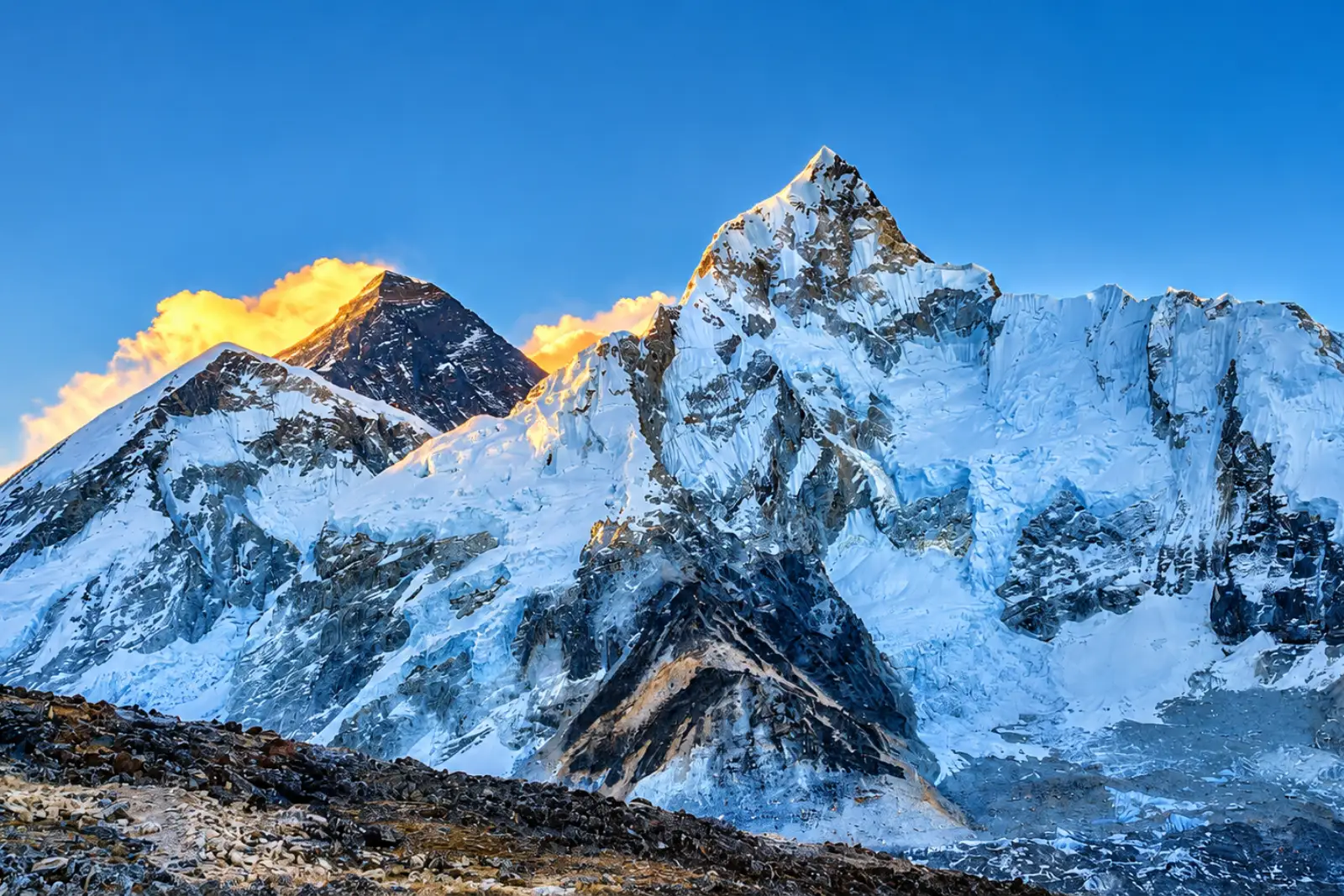
The Everest region, also known as the Khumbu valley, sits as Nepal's most iconic trekking destination. Also, this region is the home to the highest peak in the world, Mount Everest (8848 meters). So, every trek you make in the Everest region, you will be walking under the shadow of the Himalayan giant.
Located within Sagarmatha National Park, this region brings together dramatic Himalayan peaks, ancient Sherpa settlements, glacial rivers, and some of the world’s most established high-altitude trekking routes.
Trekking in the Everest region is about more than reaching a destination. It’s about walking through living mountain culture, adapting to altitude step by step, and experiencing the Himalayas in a way that feels both powerful and deeply human.

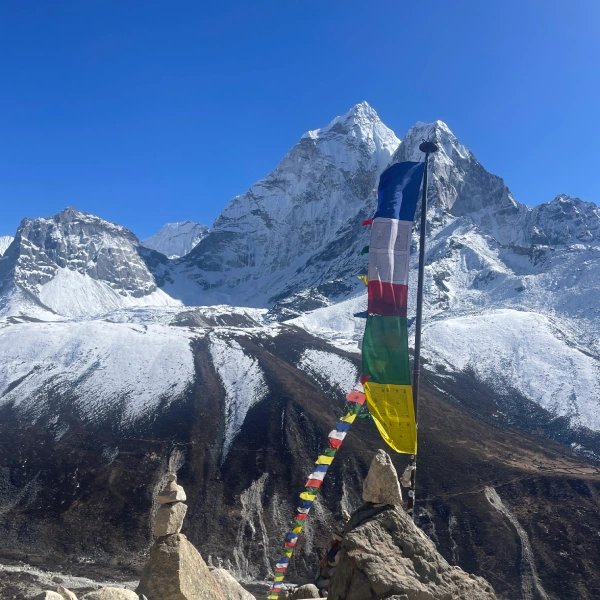
Just imagine following stone trails lined with prayer flags, crossing suspension bridges, and resting in the authentically traditional Sherpa villages. Not just that, also picture yourself crossing suspension bridges and watching the first light of sunrise strike Everest, Lhotse, and Ama Dablam. Magical, isn't it? That's what the Khumbu region offers every day.
Himalayan Ice Cap is not just another travel or trekking agency in Nepal. We are a locally-established team of mountaineering and trekking experts, not just here to organize the trip but also to assist you throughout the journey. Our trips are guided by experienced local Sherpa guides who understand the terrain, altitude, and culture of the Khumbu.
We focus on:
Small groups for safer, more personal journeys
Realistic pacing and proper acclimatization
Comfortable teahouse stays and full logistical support
End-to-end planning, from permits to Lukla flights
Our goal is simple: help you experience the Everest region safely, meaningfully, and with confidence.
Choose Your Everest Region Adventure with Himalayan Ice Cap!
There’s more than one way to experience Everest, and that’s the fun part.
The Everest region is a playground of classic trails, quiet side valleys, glacier viewpoints, and Sherpa heartland villages. With the Himalayan Ice Cap, you don’t just follow a famous route; you choose how your Everest story unfolds.
Check out the list of Everest region treks from the list, read the package details, or contact us for any questions, queries, or trek arrangements.
Where is the Everest region in Nepal?
The Everest region is in northeastern Nepal, within Sagarmatha National Park. It stretches from Lukla up to Everest Base Camp and Kala Patthar, passing iconic villages like Namche Bazaar, Tengboche, and Dingboche. Snow-capped peaks, glacial valleys, and traditional Sherpa settlements make this area a true Himalayan wonder.
What is the best time to trek in the Everest region?
Spring (March to May) brings blooming rhododendrons and mild weather, while autumn (September to November) offers crisp skies and stunning mountain vistas. Both seasons provide ideal trekking conditions for adventure, photography, and wildlife spotting.
How hard is trekking in the Everest region?
Let’s be real, these treks aren’t casual strolls. Expect 5–7 hours of trekking daily with an altitude up to 5,545m at Kala Patthar. But with smart pacing, acclimatization days, and expert guides, even moderately fit adventurers can conquer it and have a blast doing so.
Can beginners trek in the Everest region?
Absolutely! Options like the Everest View Trek or Gokyo Lakes Trek are beginner-friendly. Gradual climbs, cozy teahouses, and Sherpa guidance mean you can enjoy Himalayan thrills without feeling overwhelmed.
What are the main Everest region trekking routes?
Everest Base Camp, Gokyo Lakes, Cho La Pass, or the EBC with Gokyo combo, each has its own wow factor. From turquoise lakes to glaciers and Everest’s iconic icefall, every route delivers unforgettable vistas.
Can families trek in the Everest region?
Yes! Families with teens or older kids can enjoy scenic, safer trails. Himalayan Ice Cap even tailors trips with cultural stops, short hikes, and memorable local experiences.
Is altitude sickness a concern on Everest treks?
It can be above 3,000m. The trick: slow ascent, proper hydration, rest days, and paying attention to your body. Our guides are pros at keeping everyone safe and happy along the way.
Can I combine the Everest trekking with cultural experiences?
Definitely! From spinning prayer wheels in Tengboche Monastery to chatting with Sherpa villagers over butter tea, every trek is sprinkled with local color, tradition, and stories that make the mountains feel alive.